


HIGHLIGHTS
- The Vivo V60 price in Nepal now starts at Rs. 74,999 (12/256GB).
- It packs the new Snapdragon 7 Gen 4 chip.
- The phone is powered by a massive 6,500mAh Si/C battery.
With the launch of the Vivo V70, the V60 is officially a last-gen V-series phone. And going against the usual trend where last-gen smartphones get cheaper over time, the V60 has just gotten more expensive.

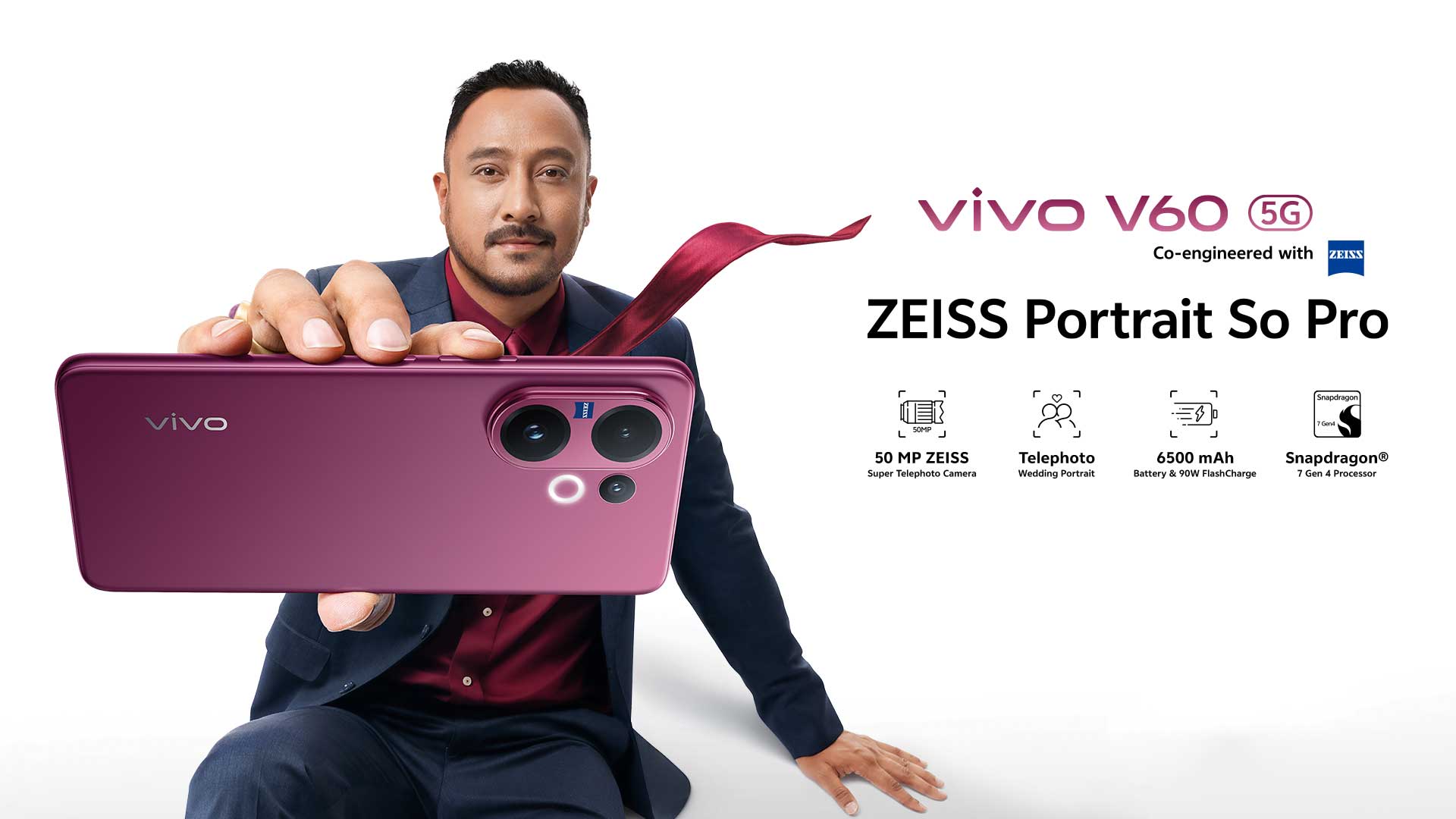
Vivo V-series smartphones always offered a good combination of camera and performance, and this addition is pretty similar too! But with the successor already out, is the Vivo V60 still a good buy?
What is the Price of Vivo V60 in Nepal?
The Vivo V60 price in Nepal has now risen to Rs. 74,999 (12/256GB) and Rs. 79,999 (12/512GB). That’s Rs. 4,000 more than what it used to cost about 6 months back. And if you are eyeing the V60, the phone is still available for purchase at all the Vivo authorized stores across the country.

Customers can opt for EMI or Exchange Facility with a Rs. 2,000 exchange bonus, powered by Goodwill Finance and Nayapurano, respectively, while buying the Vivo V60.
Ever since the launch of the V30, its successors haven’t really seen much change in specs. Similar cameras, the same unupgraded SoC, and the only major improvements being in battery and charging. It was starting to feel repetitive, new models launching with the same specs, just running the latest Android version, but without any real upgrades.
That changes with the Vivo V60. But will it be enough?
The most important upgrades are in the camera department. When the V50 launched, it was a bit of a letdown; despite being marketed as a camera-focused smartphone, it lacked a telephoto lens. The V60 finally fixes that. On top of that, it also brings a brand-new processor, which makes this upgrade even more exciting.
And with the V70 already out and much more expensive, the V60 still looks to be a good deal, even with the price bump.






But let’s not spoil all the details just yet. Let’s dive into everything the Vivo V60 has to offer.

Vivo V60 Specifications
- Body: 163.53 x 76.96 x 7.53-7.75 mm, 192-201g
- Build: IP68/IP69 dust/water resistant, plastic frame, Plastic composite sheet or Glass back panel, Shield Glass Front
- SIM: Dual SIM (Nano-SIM + Nano-SIM/eSIM)
- Display: 6.77-inch AMOLED, 60/120Hz refresh rate, FHD+ (1,080 x 2,392 pixels), 388PPI pixel density, P3 wide colour gamut, 10-bit (1.07 billion) colour depth, 5,000/1,500nits local peak/max global brightness, HDR10+, SGS Low Blue Light Certification
- Chipset: Qualcomm Snapdragon 7 Gen 4 (4nm)
- CPU: Octa-core (1x 2.8 GHz Cortex-A720, 4x 2.4 GHz Cortex-A720 and 3x 1.84 GHz Cortex-A520)
- GPU: Adreno 722
- Memory: 8/128GB, 8/256GB, 12/256GB, 16/512GB, LPDDR4X RAM/UFS 2.2 Storage
- OS: Android 15, FuntouchOS 15
- Rear Camera: 50MP wide, ƒ/1.88, 6P lens, OIS
- 50MP(telephoto), ƒ/2.65, 4P lens, 3x Optical zoom
- 8MP (ultrawide), ƒ/2.0, 120˚ FoV, 5P lens
- Front Camera: 50MP super wide-angle, ƒ/2.2, 5P lens
- Battery: Non-removable Silicon-Carbide 6,500 mAh battery, 90W FlashCharge (wired), PD, Bypass charging
- USB: USB 2.0 Type-C, OTG
- Connectivity: Wi-Fi 5, Bluetooth v5.4, NFC, GPS/Glonass/Beidou/Galileo/QZSS/NaclC navigation
- Sensors: Fingerprint (under-display optical), Accelerometer, Ambient Light, E-compass, Proximity, Gyroscope
- 3.5mm Headphone Jack: No
- Colours: Auspicious Gold, Moonlit Blue, Mist Gray
Vivo V60 Price in Nepal: Rs. 70,999 74,999 (12/256GB) | Rs. 75,999 79,999 (12/512GB)
ALSO READ: Xiaomi 15T Price in Nepal (October 2026 Updated)
Vivo V60 Overview
Camera
The Vivo V-series has always been about cameras first, and to its credit, Vivo has mostly delivered on that promise thanks to its ZEISS-partnered setups. But while we’ve seen largely the same formula for a couple of years, the V60 takes a new direction.
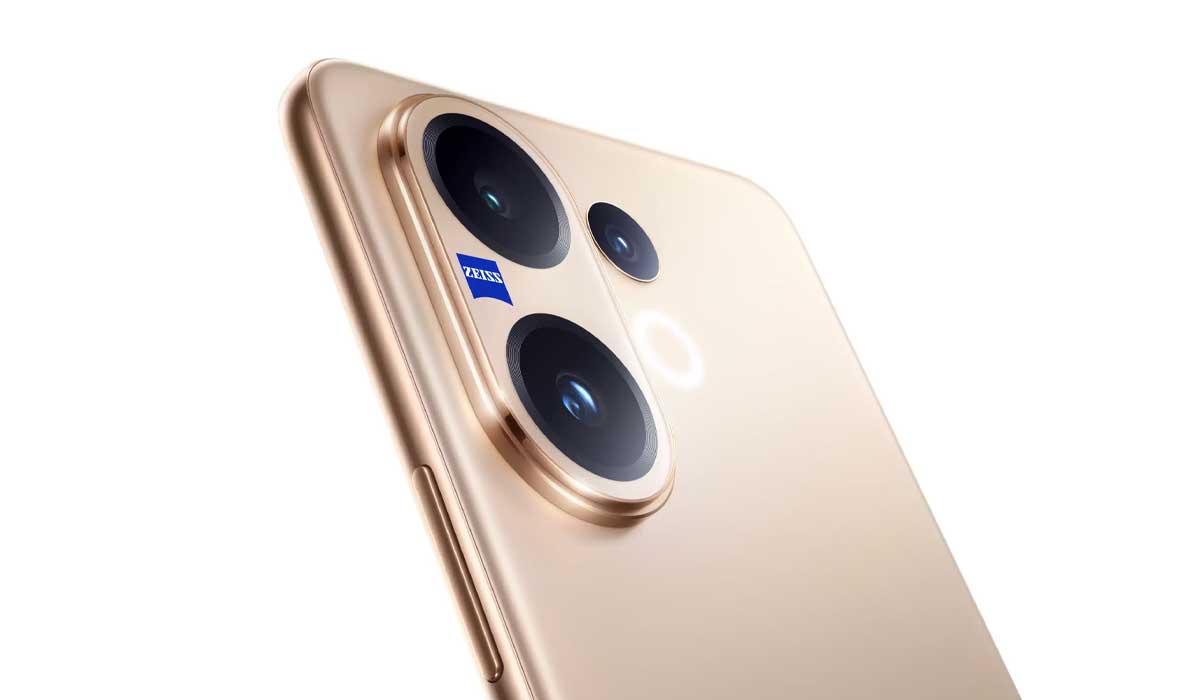
For the first time in the V-series, Vivo has added a 50MP telephoto lens with 3x optical zoom. On paper, that sounds like a big win, but given how we’ve already seen similar telephoto setups on 2026 smartphones like the Nothing Phone (4a) and Xiaomi 15T, it feels more like a late addition than a groundbreaking move.
Meanwhile, the primary camera remains the same 50MP ZEISS OIS sensor carried over from the V50. The real controversy, however, lies in the ultrawide camera; it’s been downgraded to just 8MP, a sharp drop from the 50MP ultrawide on the V50. The front camera remains the same, with a 50MP super wide-angle lens for selfies.
For a series often marketed as a camera phone, this compromise feels like a step backwards. If it weren’t for the ultrawide downgrade, the V60 could have easily placed itself among the top 3 midrange camera phones of 2025.
Snapdragon 7 Gen 4… Finally?
After years of sticking with the same processor, Vivo has finally given the V-series a much-needed upgrade. The Vivo V60 debuts with the Snapdragon 7 Gen 4, replacing the Snapdragon 7 Gen 3 that we’ve seen recycled across the V50, V40, and even the V30.
Interestingly, the V60 will likely be the first phone in Nepal to launch with the Snapdragon 7 Gen 4. But if history is anything to go by, we might be seeing this same chip powering the next couple of V-series phones as well, though I’d be happy to be proven wrong.
Performance-wise, the Snapdragon 7 Gen 4 does bring a solid boost. Benchmarks show it scoring about 30% higher on AnTuTu and 6% faster on GeekBench 6 compared to last year’s chip. On paper, that should give the V60 a noticeable edge over the V50.
Now, the same SoC on the Vivo V70 performs a touch better, but then again, the V70 pricing is a bit too high compared to the V60
At this new price, the Vivo V60 is competing with phones like the POCO X8 Pro Max, which runs a better SoC, and is CHEAPER! 2025’s bangers, such as the Infinix GT 30 Pro and the OnePlus Nord CE5, still offer better value, but when you look at the 2026 lineup of smartphones, there is very little competition here.
And that’s where the V60 feels out of place. Despite finally getting the long-overdue processor upgrade, its raw performance doesn’t quite match up to the competition at this price point.
But then again, this is a camera-centric phone, so a slight dip in performance compared to the rivals is digestible.
ALSO READ: Samsung Galaxy A56 Price in Nepal (October 2026 Updated)
Battery and Other Hardware
If there’s one area where the V-series has consistently gotten better, it’s endurance. The Vivo V60 now packs a massive 6,500mAh battery with support for 90W fast charging. Vivo is also using Si/C tech to keep the form factor relatively slim despite the big battery.
On the memory side, Nepal is getting 12/256GB and 12/512GB variants. The V50 only arrived in a singular trim, so it’s good that we now have options.
The phone does bring LPDDR4X RAM. Unfortunately, storage is where Vivo continues to cut corners. The V60 is still stuck with UFS 2.2, the same ageing standard we’ve seen since the V30. At this point, Vivo’s insistence on using UFS 2.2 has become something of a meme.
With the upgraded Snapdragon 7 Gen 4, it deserved at least UFS 3.1, if not UFS 4.0. Instead, this bottleneck could mean slower app load times and even noticeable lags when processing photos from its camera system.
Why is Vivo still doing this in 2025? Maybe it’s an oversupply of UFS 2.2 chips, or maybe it’s just a cost-cutting strategy. But either way, it feels outdated for a phone in this bracket.
And speaking of cutbacks, there’s also no Wi-Fi 6 support here. At this price, that’s hard to excuse. Especially when something like the Samsung Galaxy A56 already offers it. Clearly, there’s still room for Vivo to improve.
Design
This time, Vivo hasn’t gone for a full-blown redesign with the V60, but there are a few noticeable tweaks. The curved frames are still here, carried over from the predecessor, but the camera module gets a fresh look.
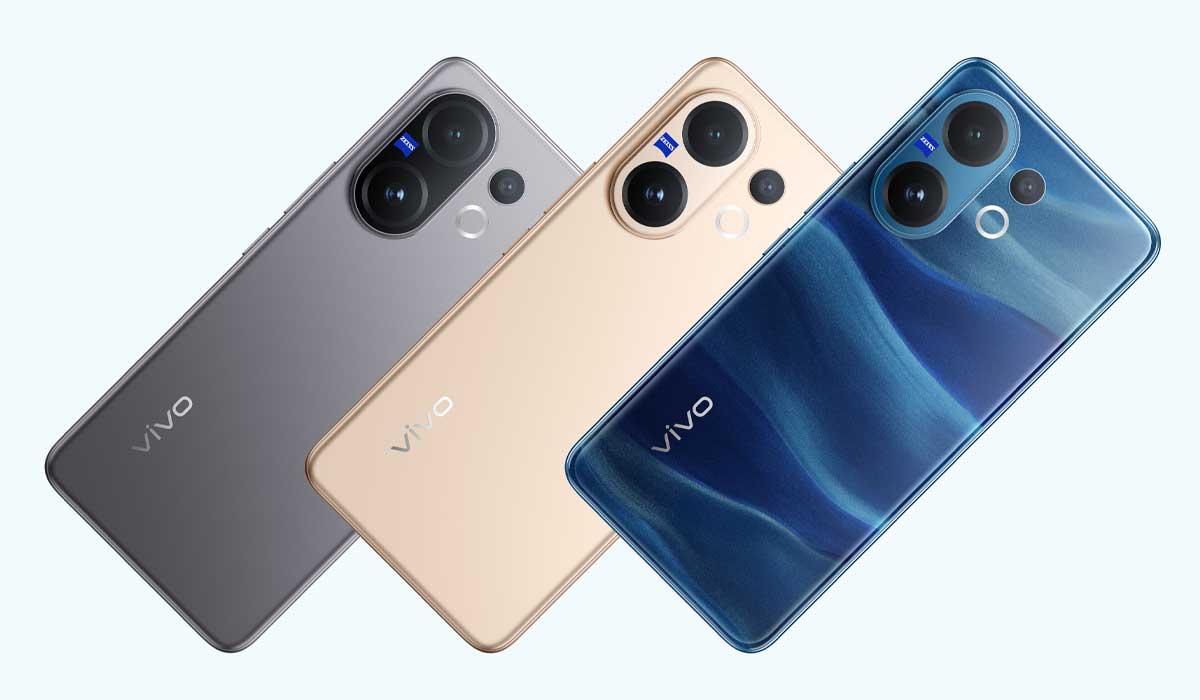
The back now houses an extra lens: two cameras sit inside a pill-shaped module, while the third one stands separately. It almost feels like Vivo is taking inspiration from the growing pill-shaped camera trend, copying the homework, but making sure it’s not too obvious.
The signature Vivo Aura Light also makes a return, though it’s smaller this time. Aside from that, the V60 keeps its impressive durability, boasting both IP68 and IP69 ratings, something the series has carried forward since the V40.
As for colors, the phone comes in three variants: Auspicious Gold, Moonlit Blue, and Mist Gray. The first two sport a premium glass back, while the Mist Gray option interestingly goes for a plastic panel instead.
ALSO READ: OnePlus Nord 5 Price in Nepal (October 2026 Updated)
Display
When it comes to the display, there isn’t a huge leap forward. The Vivo V60 still packs a 6.77-inch AMOLED panel with a 120Hz refresh rate. Since it’s not an LTPO display, there’s no dynamic refresh rate; you only get it switching between 60Hz and 120Hz.
Resolution-wise, things are still the same. Vivo has stuck with FHD+ (1080 × 2392 pixels). And yes, it’s the same 10-bit panel with support for 1.07 billion colors and DCI-P3 coverage that we saw on the V50. It seems like Vivo is going with the “don’t fix it if it ain’t broke” approach and has essentially just copied and pasted the display.
That said, credit where it’s due, Vivo has improved brightness this year. The peak brightness jumps from 4500 nits to 5000 nits, while the typical high-brightness mode (HBM) reaches 1500 nits, which should make outdoor visibility much better.
On top of that, the screen is HDR10+ certified, comes with SGS Low Blue Light certification, and is protected by what Vivo calls “Diamond Shield Glass.”
OS and AI
On the software side, the V60 runs on FuntouchOS 15 based on Android 15, with a promise of four years of OS updates and six security patches.
And since newer smartphones can’t launch without some AI buzzwords, the V60 brings features like Google Gemini integration, Live Call and Screen Translation, AI Script, and Circle to Search.
Vivo V60 Price in Nepal and Availability
The Vivo V60 price in Nepal is Rs. 74,999 (12/256GB) and Rs. 79,999 (12/512GB). The phone officially launched on August 29, 2025, in Nepal.
| Vivo V60 | Launched Price | Current Price in Nepal |
|---|---|---|
| 12/256GB | Rs. |
Rs. 74,999 |
| 12/512GB | Rs. |
Rs. 79,999 |
The Vivo V60 brings the much-needed upgrade that the V-series name desperately needed. The 3x telephoto lens is a notable addition; the Snapdragon 7 Gen 4 finally gives it that extra oomph.
When the V60 launched, I thought the upgrades came a little too late. But looking at the current smartphone market, the V60 is starting to look very appealing — especially after the V70 came in with that atrocious pricing.
Last year’s competition still offers better deals at a lower price. But when you compare the V60 against most 2026 smartphones at this price range, you are actually getting a pretty good bargain.
What do you think about the Vivo V60? Let us know in the comments!
-
ZTE nubia A57 and A77 Gets a Tiny Price Cut in NepalHIGHLIGHTS The ZTE nubia A57 starts at Rs. 21,999 (4/64GB), while the A77 starts at…

-
iPad 11th Gen Price in Nepal Gets a Minor Discount for FestivalsHIGHLIGHTS The Apple iPad 2025 price in Nepal starts from Rs. 88,000 (128GB). It is…
-
Apple iPad Air M4 Just Got Slightly Affordable in Nepal For a Little WhileHIGHLIGHTS iPad Air price in Nepal starts at Rs. 1,44,500 for the 11-inch variant and…