


HIGHLIGHTS
- Bajaj Pulsar 150 price in Nepal starts at Rs. 3.14 Lakhs and goes up to Rs. 3.56 Lakhs.
- It now comes with a BS6-compliant FI engine.
- Pulsar 150 comes in three variants: Single Disc, Twin Disc, and Single-Channel ABS options.
The Pulsar 150 has long stood as a backbone of Bajaj Nepal’s lineup and continues to rank among the country’s highest-selling motorcycles. Despite its popularity, the bike has often faced criticism for going too long without meaningful updates. Bajaj Nepal has now acknowledged that feedback and responded with a refreshed Pulsar 150 that feels more up to date and relevant for today’s riders.

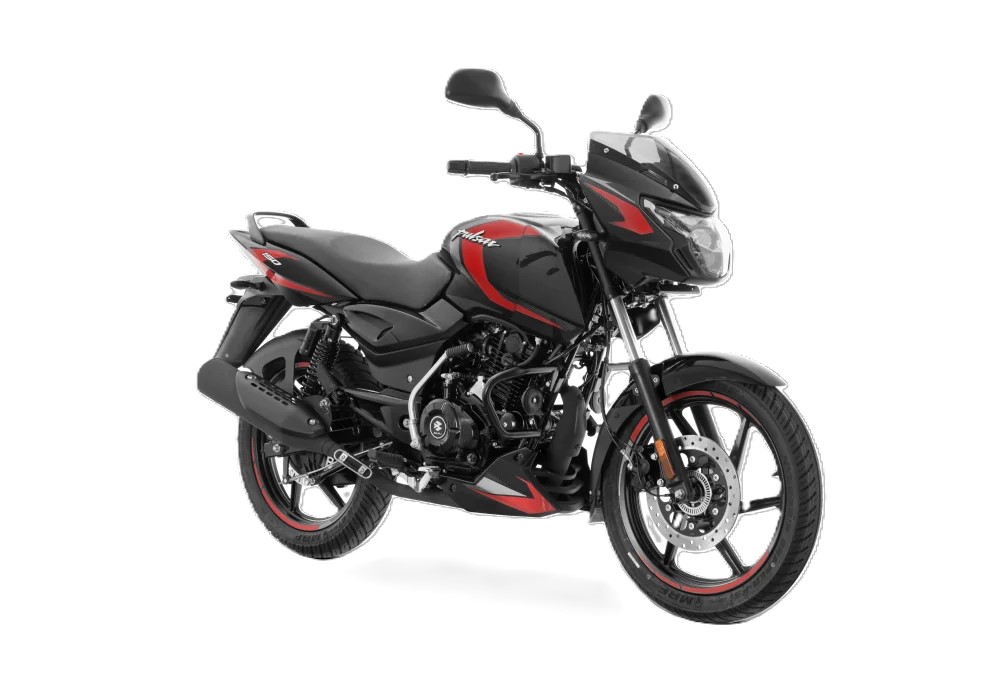
HH Bajaj, the official distributor of Bajaj motorcycles in Nepal, introduced the Pulsar 150 back in 2001 as part of their affordable commuter lineup. Since then, they’ve continued offering the bike with only minor updates over the years, and it’s still available today.
In its early years, the Pulsar 150 received some notable improvements, like a standard Front Disc Brake, the addition of DTS-i (Digital Twin Spark Ignition) technology, and cosmetic upgrades such as Twin Headlamps. But beyond those early enhancements, the bike hadn’t kept pace with the evolving trends of the 150 cc segment.

That long period of stagnation has finally come to an end. Bajaj Nepal has now introduced a comprehensively updated version of this iconic commuter. The latest iteration brings changes across design, engine refinement, instrumentation, and braking hardware.
Together, these upgrades modernize the Pulsar 150 without losing sight of what made it successful in the first place. It continues to build on its long-standing image as a dependable daily commuter, but now does so with a fresher appeal and a feature set better aligned with current expectations.
What is the Price of Bajaj Pulsar 150 in Nepal?
Bajaj Pulsar 150 price in Nepal starts at Rs. 3.14 Lakhs and goes up to Rs. 3.56 Lakhs. Moreover, it is available across three different options: Single-Disc (Standard), Dual-Disc (TD), and Single-Channel ABS.
The Single-Disc variant sits at the entry point with a price of Rs. 3.14 Lakhs. Step up to the Dual-Disc version, and the price increases to Rs. 3.33 Lakhs, bringing additional braking hardware and subtle functional upgrades. At the top of the range is the Single-Channel ABS variant, priced at Rs. 3.56 Lakhs, which also happens to be the latest addition to the lineup.






Between the Single-Disc and Dual-Disc variants, the differences remain fairly straightforward. They mainly come down to the braking setup, seat configuration, and tyre width. However, the Single-Channel ABS version goes beyond these incremental changes. You can refer to the detailed breakdown section of this article for understanding the differences between these variants.

To understand the full-scale of the differences and new enhancements, let’s take a quick look at the Bajaj Pulsar 150 in Nepal along with its key specifications in 2026.
Bajaj Pulsar 150 Specifications
- Engine Type: Single-Cylinder, 4-Stroke, 2-Valve, SOHC, DTS-I
- Emission Standard:
- BS4 (SD & TD)
- BS6 (Single-Channel ABS)
- Displacement: 149.5 cc
- Cooling System: Air Cooled
- Starting Mechanism:
- Self Starter and Kick (SD)
- Self Starter Only (TD)
- Self Starter and Kick (Single Channel ABS)
- Max Power:
- 14 PS @ 8000 rpm (SD & TD)
- 14 PS @ 8500 rpm (Single Channel ABS)
- Max Torque:
- 13.4 Nm @ 6000 rpm (SD & TD)
- 13.25 Nm @ 6500 rpm (Single Channel ABS)
- Gearbox: 5-Speed
- Top Speed: 110 kmph
- Fuel Tank Capacity: 15-liters
- Mileage: 40-45 Kmpl
- Front Tyre:
- 80/100-17 (SD)
- 90/90-17 (TD)
- 80/100-17 (Single-Channel ABS)
- Rear Tyre:
- 100/90-17 (SD)
- 120/80-17 (TD)
- 100/90-17 (Single-Channel ABS)
- Tubeless Tyres: Yes
- Braking System:
- Single Front Disc / Rear Drum Brake (SD)
- Dual Disc (TD)
- Singe Front Disc with ABS / Rear Drum Brake (Single-Channel ABS)
- Suspension Setup: Telescopic with Anti-Friction Bush and Twin Nitrox Shock Absorber
- Seat Height: 785 mm
- Ground Clearance: 165 mm
- Kerb Weight:
- 143 kg (SD)
- 144 kg (TD)
- 148 kg (Single Channel ABS)
- Colors: Red, Blue
Bajaj Pulsar 150 Price in Nepal: Rs. 3,13,900 (Single-Disc) / Rs. 3,55,900 (Single-Channel ABS)
* SD – Single Disc, TD – Twin Disc. SD, TD, and Single-Channel ABS are the three variants available for the Pulsar 150 currently.
ALSO READ: Bajaj Bikes Price in Nepal (October 2026 Updated)
Bajaj Pulsar 150 Overview
Design
The SD and TD variants of the Bajaj Pulsar 150 boast a muscular design that hasn’t changed much, but while the Single Channel ABS variant carries that familiar design language, it does feature some cosmetic upgrades.
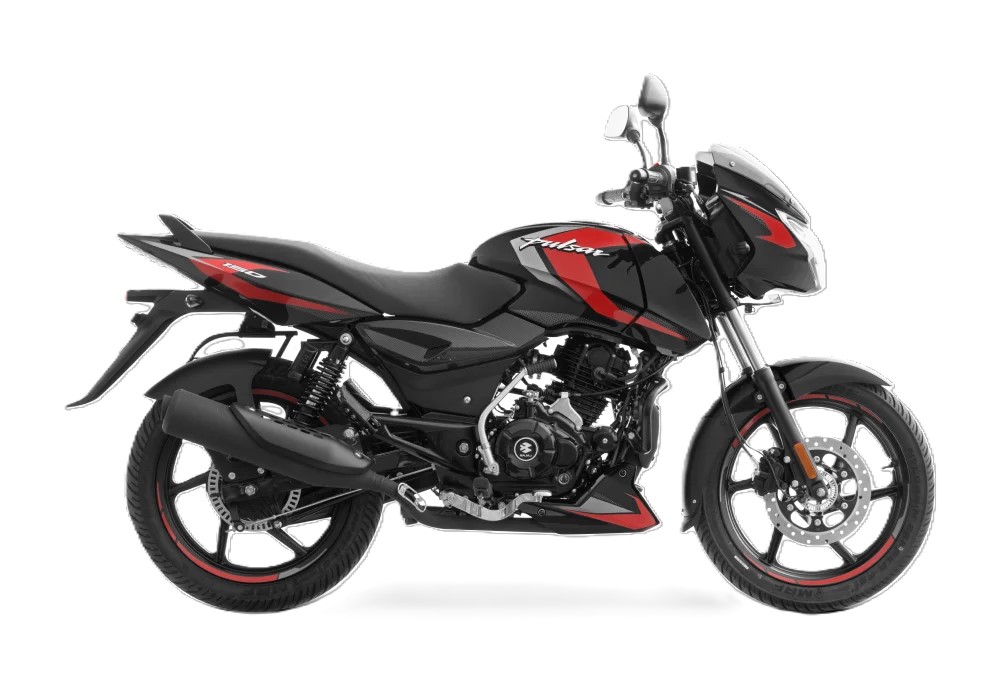
In the SD and TD variants, the front features a signature wolf-eyed Headlamp with an AHO functionality with a minimal visor accompanied by Halogen side indicators. Moreover, like every other Bajaj motorcycle, it comes with familiar styling. It daunts the “Dagger” inspired graphics matched with the engine cowl.
On the other hand, the Single-Channel ABS replaces the signature Headlamp design with a sharper looking LED Headlamps and LED side indicators, giving the Pulsar 150 a more predatory gaze. Moreover, there are new graphics on the body, which help it distinguish from its predecessor variants.
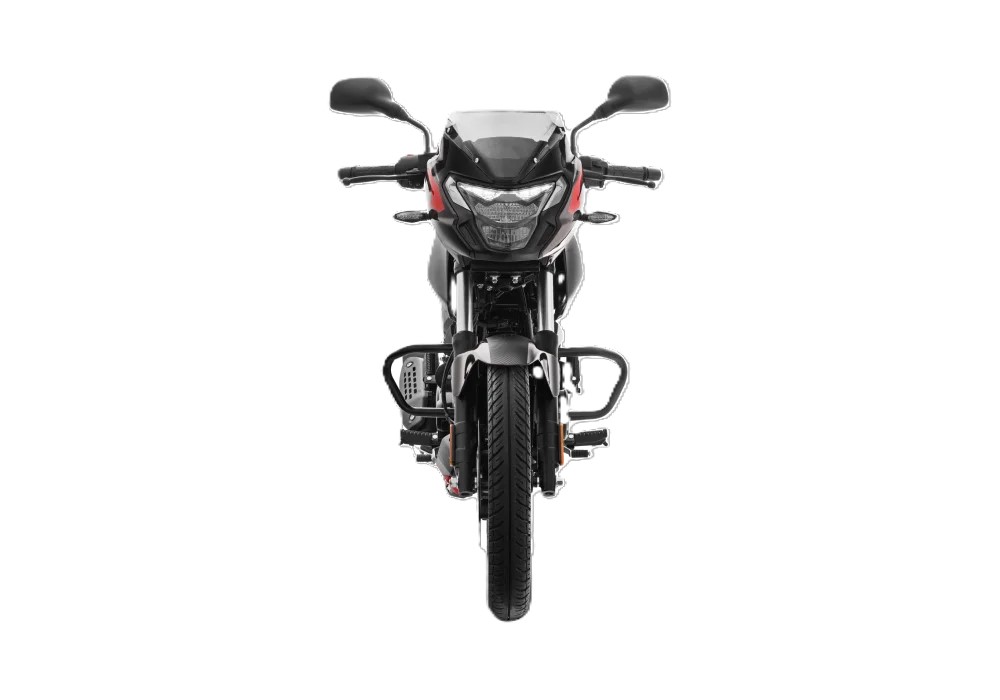
Looking at the bike from the side, it has always been a pretty aesthetic, particularly due to the Dual-tone finish and also due to the slight contour on the fuel tank. The newly added variant has some subtle silver-colored elements on top of the existing paint scheme. The bike stands on 17-inch Alloy wheels but differs in the seat layout depending on the variant.
The TD variant sports a split-seat design, while the SD and ABS variants have a single-seat layout. Also, the TD variant misses out on a kick-starter, which might be a dealbreaker for some riders who prefer the backup of a kick start, especially in cold regions.
The rear section features the signature Pulsar-style LED taillights and a simple mudguard, which does the job well. However, the grab rail design, especially on the TD unit, could really use some improvement.
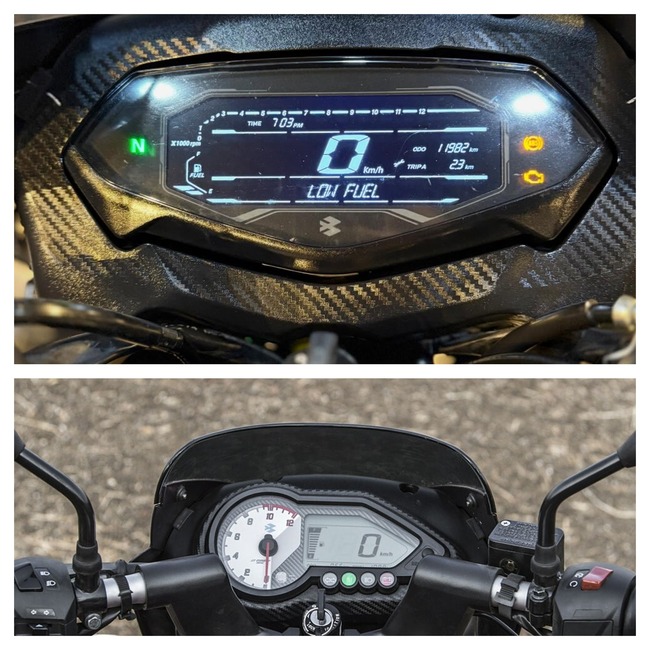
Furthermore, all variants include other classic Pulsar features like Clip-on Handlebars and Back-lit Switches, but while the SD and TD variants have Analog-Digital Instrument Console, the new ABS variant now comes with a Fully Digital Console with Bluetooth support, which is a massive upgrade on this heritage carrying bike.
ALSO READ: Yamaha FZ V3 Price in Nepal (October 2026 Updated)
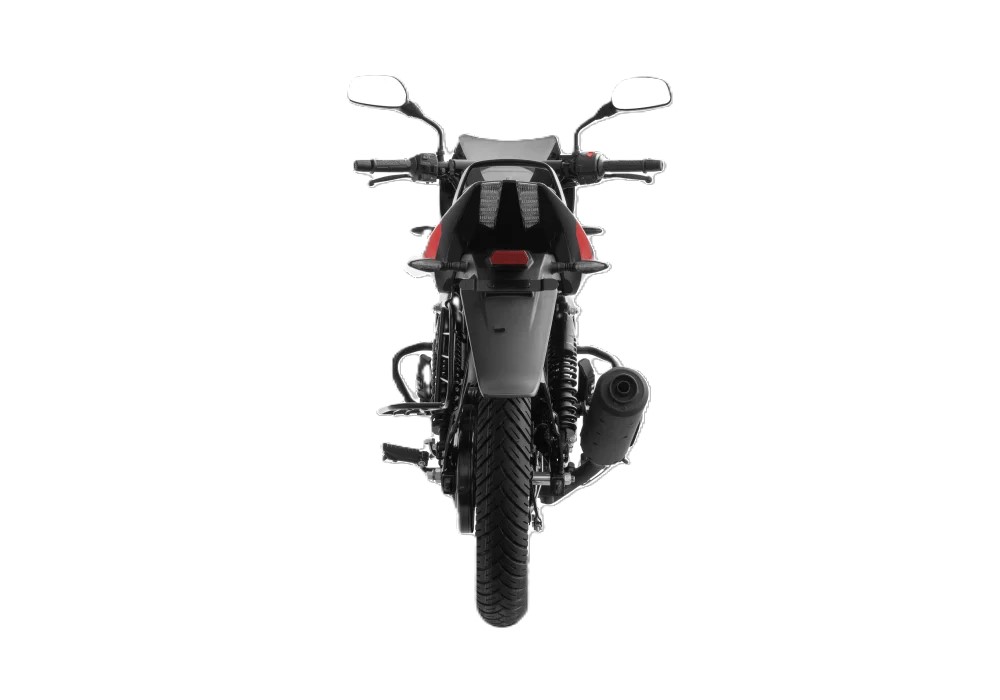
Additionally, the Bajaj Pulsar 150 is available in Red and Blue colors.
Performance
The SD and TD variants of the Bajaj Pulsar 150 are powered by a 149.5cc Twin Spark DTS-I, which is a BS4-compliant carburetor engine. It can generate a max power of 14 PS at 8000 rpm and a max torque of 13.4 Nm at 6000 rpm.
In comparison, the ABS variant switches to a slightly revised 149cc engine that complies with BS6 regulations and uses fuel injection. Because BS6 norms impose stricter emission limits, Bajaj has made subtle mechanical adjustments. The engine still makes 14 PS, but it now reaches that figure at a higher 8500 rpm. Torque output drops marginally from 13.4 Nm to 13.25 Nm, arriving at 6500 rpm. On paper, the change looks small, and in real-world riding, it feels even more subtle.
All variants pair the engine with a 5-speed gearbox and come equipped with a 15-liter fuel tank. In everyday conditions, riders can expect a fuel efficiency of around 40 to 45 kmpl, depending on riding style and traffic.
Performance may not feel thrilling by modern standards, but it remains more than adequate for daily commutes and routine city rides. The bike does its job confidently, without demanding much from the rider. Beyond the numbers, the Pulsar 150 carries a tough, raw personality that only becomes apparent once you spend time in the saddle. It feels solid and engaging in a way that spec sheets fail to explain.
With the introduction of fuel injection in the BS6 variant, the bike gains a noticeable touch of sophistication. This refinement shows up clearly in smoother power delivery, cleaner throttle response, and a more polished engine feel overall.
Additional Details
The Telescopic Fork with Anti-Friction Bush and Adjustable Twin Shock Absorber handles suspension duties. However, the front forks on the Dual-Disc variant are more chunky.
The dimensions of the SD and Single-Channel ABS variant are 2055mm long, 755mm/765 mm wide, and 1060 mm tall. Moreover, the wheelbase is 1320mm. However, the dimensions of the Dual-Disc variant are 2035 mm long, 765 mm wide, and 1115 mm tall. Moreover, the wheelbase is 1345 mm.
Bajaj Pulsar 150 gets a 165mm ground clearance. And, the kerb weight is 143 kg (SD), 144kg (TD), and 148 kg (Single Channel ABS).
ALSO READ: Bajaj Pulsar NS 200 Price in Nepal (October 2026 Updated)
Bajaj Pulsar 150 Feature Highlights
- Twin-Spark DTS-I Engine
- Sporty Styling with Sharp Fuel Extension
- LED Headlamps
- Telescopic Forks
- LED Tail-Lamps
- Engine Cowl
- Clip-On Handlebar
- Digital Instrument Cluster
- Back-lit Switches
- Single-Seat
- Singe Disc Braking
- Single-Channel ABS
*Aforementioned features are the features available on the Single-Channel ABS variant.
Bajaj Pulsar 150 Price in Nepal and Availability
Bajaj Pulsar 150 price in Nepal starts at Rs. 3,13,900 for the Single Disc variant (SD), goes to Rs. 3,32,900 for the Twin Disc variant (TD), and Rs. 3,55,900 for the Single-Channel ABS variant.
The Pulsar 150 has been screaming for major technical upgrades for quite some time now, amidst the growing competition. Addressing the declining competitiveness of Bajaj’s favorite icon, the new variant addresses all the shortcomings. Here’s a quick breakdown of the differences between the three variants:
| Variant | Single-Disc | Twin-Disc | Single-Channel ABS |
|---|---|---|---|
| Engine Type | BS4 – Carbureted | BS4 – Carbureted | BS6 Fuel-Injected |
| Power Output | 14 PS @8000 rpm | 14 PS @8000 rpm | 14 PS @8500 rpm |
| Torque | 13.4 Nm @6000 rpm | 13.4 Nm @6000 rpm | 13.25 Nm @6500 rpm |
| Front Brake | Disc | Disc | Disc with Single-Channel ABS |
| Rear Brake | Drum | Disc | Drum |
| ABS | No | No | Yes (Single-Channel) |
| Tyres | Narrower tyres | Wider tyres | Similar to the Single Disc variant |
| Seat Type | Single-piece seat | Split seat | Single-piece seat |
| Instrument Cluster | Semi-digital | Semi-digital | Fully digital |
| Headlamp and Indicators | Halogen | Halogen | LED |
| Starter | Self + Kick Start | Self Start Only | Self + Kick Start |
| Kerb Weight | 143 kg | 144 kg | ~145 kg |
Interested individuals can reach out to the nearest Bajaj showroom for additional information.
The following table lists the Bajaj Pulsar 150 price in Nepal for October 2026.
| Bajaj Pulsar 150 Variants | Price in Nepal |
|---|---|
| Single Disc (Front Disc Only) | Rs. 313900 |
| Dual Disc | Rs. 332900 |
| Single-Channel ABS | Rs. 355900 |
Rivals
Just a generation ago, the Bajaj Pulsar 150 was a dream machine for many first-time riders in Nepal. It had the looks, the power, and the road presence that made it an easy choice. But the biking scene in Nepal has moved on, and the Pulsar 150 struggled to keep up. Now with the latest addition of the ABS variant, the Pulsar 150 has again become competitive. But with that, it now faces competition from its own sibling, the Bajaj Pulsar N150.
When you park the N150 next to the Pulsar 150, it’s like looking at a father and his son. The N150 feels young and fresh with its aggressive design, LED projector headlamp, Fuel-Injected BS6 engine, digital instrument cluster, and single-channel ABS. The new Pulsar 150 also features LED Headlamps, a Fuel-Injected BS6 engine, a digital instrument cluster, and single-channel ABS.
Yes, that basically sounds the same. And, in fact, the spec-sheets of both bikes are on a similar ground now. The real difference lies in design philosophy and target audience. The Pulsar 150 continues to appeal to riders who grew up with its muscular yet familiar styling and value its rugged, no-nonsense character. It carries decades of legacy and still resonates with buyers who prioritize continuity and proven appeal.
The N150, on the other hand, speaks directly to younger riders who find the Pulsar 150’s design dated and want something sharper, more expressive, and visually aligned with modern trends.
While the Pulsar 150 has successfully regained its relevance, the N150 stands as Bajaj’s new-generation choice in the 150cc segment, clearly designed to win over the next wave of riders.
What are your thoughts on the Bajaj Pulsar 150? Share them with us in the comments below!
Frequently Asked Questions
Who is the authorized distributor of Bajaj Pulsar 150 in Nepal?
HH Bajaj is the official distributor of Bajaj Pulsar 150 in Nepal.
What is the price of the Pulsar 150 in Nepal?
Bajaj Pulsar 150 price in Nepal starts at Rs. 3.14 Lakhs to Rs. 3.56 Lakhs.
Is the Bajaj Pulsar 150 BS6 available in Nepal?
Yes, the Bajaj Pulsar 150 BS6 is now available in Nepal.
Does the Bajaj Pulsar 150 come with ABS?
Yes, the Bajaj Pulsar 150 comes with a Single-Channel ABS option, along with Front Disc and Dual Disc options.
Is the Pulsar 150 good for daily use?
Yes. The Bajaj Pulsar 150 can be considered an ideal bike for daily use.
-
iPad 11th Gen Price in Nepal Gets a Minor Discount for FestivalsHIGHLIGHTS The Apple iPad 2025 price in Nepal starts from Rs. 88,000 (128GB). It is…

-
Apple iPad Air M4 Just Got Slightly Affordable in Nepal For a Little WhileHIGHLIGHTS iPad Air price in Nepal starts at Rs. 1,44,500 for the 11-inch variant and…
-
Apple Airpods 5 Arrives in Nepal With 50% Better Active Noise Cancellation!HIGHLIGHTS Apple AirPods 5 price in Nepal starts at Rs. 31,000 for the standard variant.…