



HIGHLIGHTS
- Bajaj Chetak price in Nepal is Rs. 3,49,900.
- Chetak is available in a single variant (3501) for the time being.
- It is powered by a 4 kW Motor and a 3.58 kWh Lithium-ion battery pack.
Bajaj tapped into the nostalgia of its iconic 1972 ‘Chetak’ and reimagined it as an electric scooter, which has been well-received in its home market. Similar was the case here in Nepal, but now, the asking price for the scooter has gotten a little steeper.

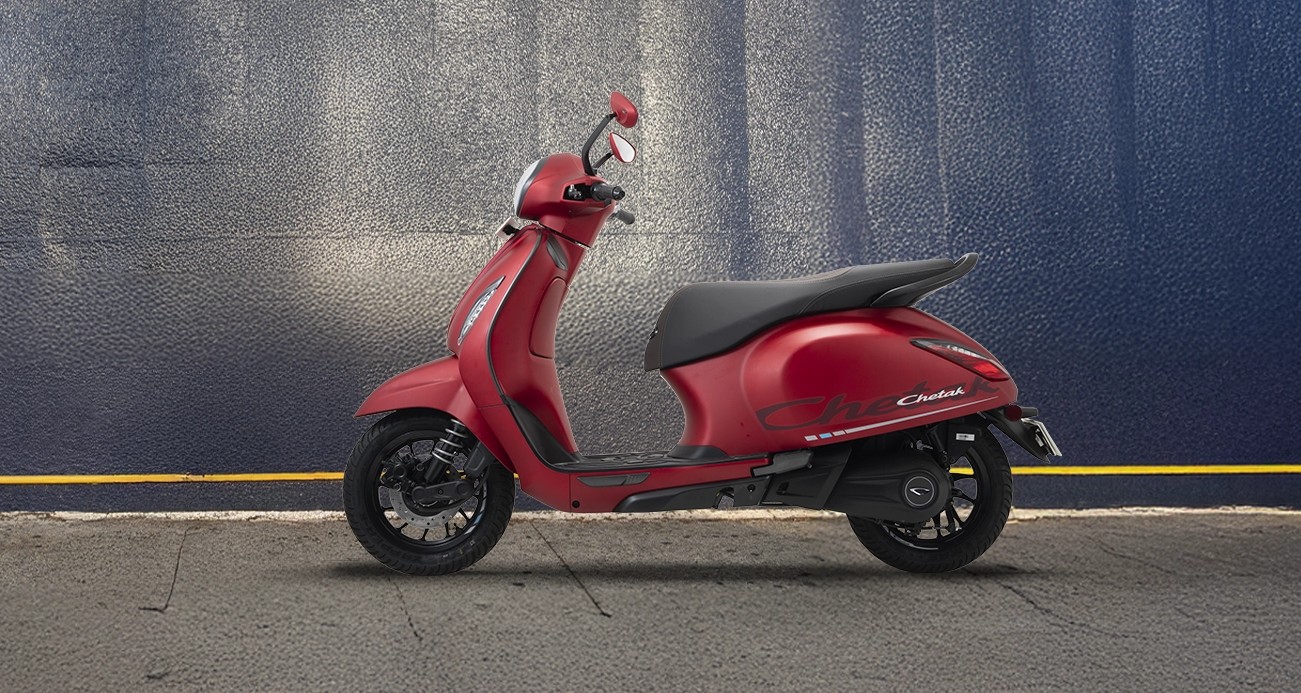
The “Chetak” name carries iconic status, first launched in the 1970s and dominating the Indian scooter market through the 1980s, with waiting periods once stretching up to 10 years. Bajaj revived the name in 2020 under its “Urbanite” EV brand, successfully reintroducing it as an electric scooter.
Since then, Bajaj has refined the Chetak across multiple variants. The Chetak 35 Series was launched in December 2024, and it quickly surged in popularity, becoming India’s second best-selling electric scooter by early 2025, just behind the TVS iQube.

Even in 2026, it continues to hold that position while also ranking among India’s top 10 best-selling scooters overall, ahead of popular names like the Honda Dio and Yamaha Ray ZR.
What is the Price of Bajaj Chetak in Nepal?
Bajaj officially launched the Chetak 3501 in Nepal on August 3rd 2025, at Rs. 3,24,900. However, somewhere around mid-April, the scooter saw an increase of Rs. 25,000, likely due to increasing transportation costs and exchange rates.
This brings the official price of the Bajaj Chetak in Nepal up to Rs. 3,49,900. Meanwhile, the scooter can be experienced at the “Customer Experience Zone” at Naxal, Kathmandu.
However, you may have to wait a little while to purchase it as the brand is running low on stock. Financing options are also available with interest rates as low as 9.99% and a payback period stretching up to 35 months.
The Bajaj Chetak 3501 stands as the top-spec model in the Chetak 35 series lineup, positioned above the mid-range 3502 and the entry-level 3503.
Both the 3502 and 3503 variants should have launched in Nepal as well, but that hasn’t been the case so far. Maybe they will arrive alongside the newer Bajaj Chetak C2501. Who knows?

But for now, let’s focus on what we have in hand, i.e. the Bajaj Chetak (3501) and have a quick look at its key specs and price in Nepal for 2026.
Bajaj Chetak 3501 Specifications
- Motor: 4 kW Hub Motor
- Battery: 3.58 kWh Lithium-ion Battery
- Peak Power: 4.5 kW
- Peak Torque: N/A
- Range: 153 km (IDC Claimed)
- Top Speed: 73 km/h (Eco mode), 80 km/h (Sports mode)
- Charging Time with 950W Charger:
- 0 to 80% in 3 hours
- 0 to 100% in 4 hours and 25 minutes
- Tyres: Tubeless
- Tyres Size:
- 90/90 -12 (Front)
- 90/90 – 12 (Rear)
- Tubeless Tyres: Yes
- Braking Type: Disc/Drum Setup with Regenerative Braking
- Suspension: Single Side Leading Link and Monoshock (Offset)
- Seat Height: 760 mm
- Storage Capacity: 5-liter Frunk / 35-liter Under Seat Storage
- Ground Clearance: 160 mm
- Weight: 129 kg
- Colors: Brooklyn Black, Hazelnut, Indigo Metallic, Matte Scarlett Red, Pista Green
Bajaj Chetak Price in Nepal: Rs. 3,24,900 3,49,900
ALSO READ: Bajaj Bikes Price in Nepal (October 2026 Updated)
Bajaj Chetak Overview
Exterior
The Bajaj Chetak embraces a design philosophy that bridges nostalgia with innovation. It draws inspiration from the original Chetak’s legacy of trust and reliability while reimagining it for the era of electric mobility. The overall design language leans into a “neo-retro” aesthetic that blends curves with modern features.
Up front, a distinctive horseshoe-shaped LED Headlamp takes center stage, bearing a glowing “C” for Chetak at its core. This unit is framed by a circular LED DRL, which can be toggled directly from the handlebar-mounted controls. Just below, the front apron showcases a ribbed section with a Grille-like center detail, flanked by silver-trimmed turn indicators that subtly elevate the scooter’s visual appeal.

From the side, the Chetak rides on 12-inch Alloy wheels. If it looks longer than the average scooter, that’s no illusion. Bajaj has stretched the wheelbase to accommodate a larger seat and maximize under-seat storage. This extended length results from smart engineering decisions, especially regarding frame layout and battery placement.
To create more usable space, Bajaj moved the battery pack (traditionally placed under the seat in most e-scooters) to the floorboard area. As a result, the floorboard appears slightly raised and bulkier. However, this shift lowers the scooter’s center of gravity, significantly improving balance and ride stability. In return, riders gain a larger, more practical storage space under the seat.
The seat itself features a textured finish that enhances grip and comfort for the rider. And, the generous cushioning ensures both the rider and pillion enjoy a relaxed and supportive ride.

At the rear, the design maintains visual continuity. The grille-like styling from the front apron reappears subtly around the taillight and indicators. The Chetak logo, placed on both sides, converges toward the center when viewed from the rear, which creates a sense of symmetry. However, the absence of a rear backrest may leave some riders wishing for added support.
ALSO READ: Ather Rizta Price in Nepal (October 2026 Updated)
Instrument Cluster
On the instrumentation side, the Chetak (3501) features a 5-inch TFT Touchscreen with Smartphone Connectivity. Dubbed ‘TechPac,’ this optional system includes navigation, music control, call management, and notification alerts as standard.
The cluster also displays essential ride data such as Speed, State of Charge, Battery Efficiency, Odometer, and Regenerative Braking status. All of these functions are managed via an all-button interface on the handlebars.

Riders can control almost everything, from screen toggles and riding modes to Headlight Brightness, Storage Access, and even Turn Indicators, all through press-button controls. While this setup keeps the cockpit clean and organized, its unconventional layout may divide opinion, especially among traditional riders.
Performance
The Bajaj Chetak launched in Nepal is the top-spec variant in the 35-series called ‘3501’ and is powered by a 4 kW Permanent Magnet Synchronous Motor. However, the company representative at the “Experience Center” mentioned the scooter offers a peak power of 4.5 kW when we enquired about it.
It has an IDC-claimed range of 153 km, but if you are curious about the real-world range and performance of the Bajaj Chetak 3501, then you can check out our review video below:
Additionally, the 3501 comes with a 950W standard onboard charger, enabling a 0 to 80% charge in just 3 hours. However, a full charge takes approximately 4 hours and 25 minutes.
The entire 35 series is built on a fresh platform with a redesigned electric motor and controller unit. Bajaj has positioned the 3.58 kWh lithium-ion battery pack lower, increasing footboard space and improving storage on the under-seat section.
The 3501 achieves a top speed of 73 km/h in eco mode, making it well-suited for urban commuting. Meanwhile, when you go into sports mode, the top speed reaches 80 km/h.
Additional Details
Single Side Leading Link and Single Gas Emulsion combination handles the suspension duties. However, this is a very old type of suspension setup, especially the front one, which degrades the overall ride feel of the scooter.
The dimensions are 1914 mm in length, 725 mm in width, and the wheelbase is 1335 mm. Additionally, the seat height is 775 mm while the seat length is 725 mm.
The ground clearance for the Chetak is 168 mm. Talking about storage, there is a 5-liter Frunk space below the instrument cluster, which also includes a phone charger. And, the under-seat storage is a massive 35 liters.
And, the braking department is handled by a disc at the front, while the rear has a drum brake setup with regenerative capabilities.
Bajaj Chetak Features Highlight
- 4 kW PMS Motor
- 3.58 kWh Lithium-ion Battery pack
- 153 km IDC claimed Range
- 950 W Onboard charger Inclusive
- Metal Body Frame
- LED Headlamp with LED DRLs
- 12-inch Alloy Wheels
- 168 mm Ground Clearance
- 5-liter Frunk with Phone Charger, 35-liter Under Seat Storage
- 5-inch TFT Touch Screen with Bluetooth and Mobile Connectivity
- Disc/Drum Braking Setup, Hill Hold Assist
- Anti-Theft Alert, Reverse Mode
ALSO READ: TVS iQube Price in Nepal (October 2026 Updated)
Bajaj Chetak Price in Nepal and Availability
The Bajaj Chetak was priced quite aggressively at Rs. 3,24,900. Now, the scooter costs Rs. 25,000 more, bringing its official price to Rs. 3,49,900.
Interested individuals can visit the Chetak’s Experience Center located at Naxal, Kathmandu, to experience and book the scooter.
The following table lists the Bajaj Chetak (3501) price in Nepal for 2026.
| Bajaj Chetak | Launch Price (August 2025) | Current Price (October 2026) |
|---|---|---|
| Chetak 3501 | Rs. 3,24,900 | Rs. 3,49,900 |
Rivals
The Bajaj Chetak 3501 fiercely rivals the TVS iQube, as both brands dominate Nepal’s two-wheeler market and have very similar specs.
The Chetak 3501 and iQube S are closely matched in performance, with peak power of 4.5 kWh and 4.6 kWh, respectively. Their top speeds are also within a rounding difference since Chetak can reach 80 km/h, while iQube maxes out at 78 km/h. (Though the 3 kWh variant of the iQube can reach 82 km/h).
The Chetak 3501 boasts superior practicality, offering 35 liters of underseat storage, three liters more than the iQube’s 32-liter compartment. Though the difference seems small, the extra space adds convenience for riders.
Likewise, charging efficiency also favors the Chetak 3501. With its 950W charger, it reaches 80% charge in just three hours, whereas the iQube takes 4.5 hours with its 650W charger.
On paper, the Chetak 3501 should deliver a better range due to its well-balanced motor and battery capacity. However, its additional 12 kg weight might impact real-world efficiency. Meanwhile, the iQube stands out with a richer set of features, adding to its appeal.
One other thing that requires some discussion is the suspension setup on Chetak vs the one in iQube. Hands down, the outdated suspension setup on the Chetak is inferior to the simple telescopic fork on the iQube, and that can make a huge difference in the overall ride experience of the scooter. I think Bajaj should soon fix this.
The pricing of these two scooters has added an interesting twist to the competition. Previously, the Bajaj Chetak *was* priced neck-and-neck with the mid-variant of TVS iQube (the iQube 3 kW variant’s price has since dropped to Rs. 3,14,900). Meanwhile, with the recent bump, Chetak has become more expensive than even the highest iQube variant (Rs. 3,39,900).
The Ather Rizta Z also sits in the same segment with similar motor power, a larger battery, and a whole lot of features, which will surely attract customers. But the asking price of the Rizta is also a bit higher than these two.
That said, it all comes down to what’s more important to the individual customer. And with all the scooters aiming for dominance, the competition in the Nepali electric scooter market is very exciting.
What do you think about the Bajaj Chetak? Is it an intriguing option? Do let us know in the comments!
Frequently Asked Questions
Who is the authorized distributor of Bajaj Chetak in Nepal?
HH Bajaj is the authorized distributor of Bajaj Chetak in Nepal.
What is the price of the Bajaj Chetak in Nepal?
Bajaj Chetak price in Nepal is Rs. 3,49,900.
What is the ground clearance of the Bajaj Chetak?
The ground clearance in the Bajaj Chetak is 160 mm.
What is the real range of the Bajaj Chetak?
Bajaj Chetak has an IDC claimed range of 153 km. But, in real-world conditions, it will give a 100+ km range as well.
-
iPad 11th Gen Price in Nepal Gets a Minor Discount for FestivalsHIGHLIGHTS The Apple iPad 2025 price in Nepal starts from Rs. 88,000 (128GB). It is…

-
Apple iPad Air M4 Just Got Slightly Affordable in Nepal For a Little WhileHIGHLIGHTS iPad Air price in Nepal starts at Rs. 1,44,500 for the 11-inch variant and…
-
Apple Airpods 5 Arrives in Nepal With 50% Better Active Noise Cancellation!HIGHLIGHTS Apple AirPods 5 price in Nepal starts at Rs. 31,000 for the standard variant.…