


HIGHLIGHTS
- The Vivo V80 price in Nepal is expected to start from Rs. 109,999 for the 12/256GB variant.
- It features a ZEISS-backed 50MP telephoto with 3x optical zoom and 10x digital zoom in portrait mode.
- The phone is powered by Snapdragon 7 Gen 4, which is paired with a 7,200mAh battery.
Vivo’s V-series has spent the last few generations trying to blur the line between a premium mid-ranger and a proper flagship, especially when it comes to cameras, design, and increasingly, price.

That trend is continuing with the Vivo V80, which is set to launch in India on October 6, 2026, with a Nepal launch also expected, although Vivo has not confirmed a local launch date. It succeeds the V70, a phone that already pushed the V-series much deeper into premium territory than before.
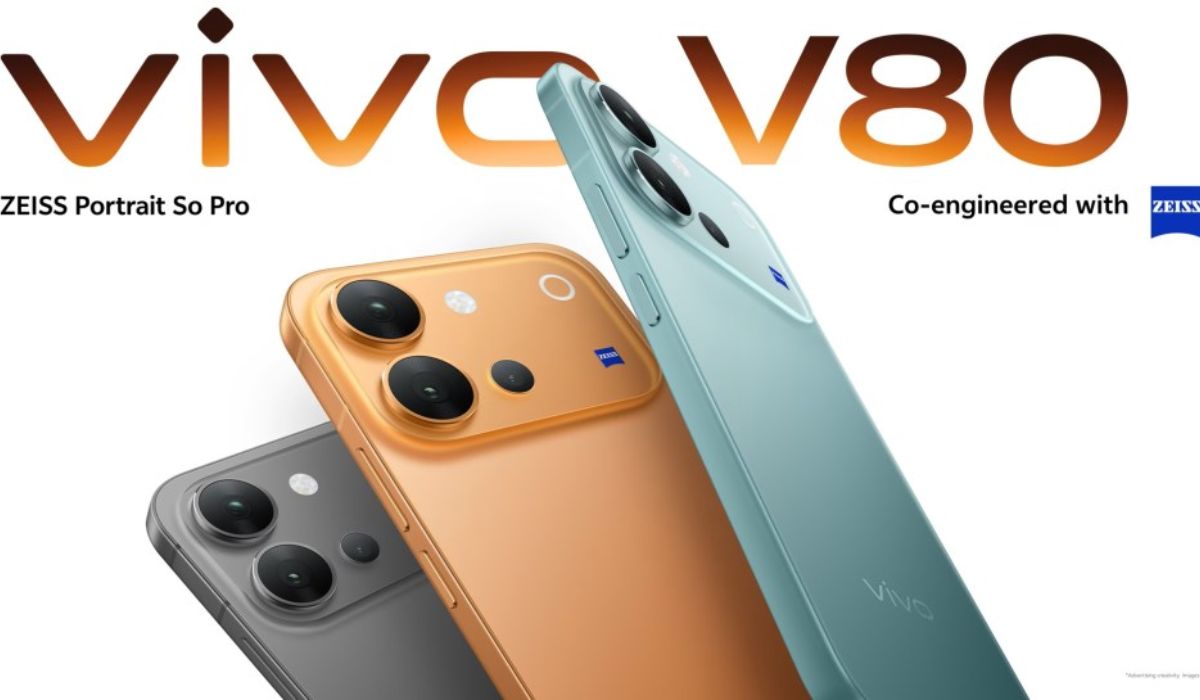

Now, the V80 looks ready to take another swing at that space. There are some noticeable upgrades on paper, but there are also a few familiar choices that make things more interesting than a straightforward generational upgrade.
Before getting into what has actually changed, though, let’s talk about how much the V80 could cost in Nepal.
What is the Price of Vivo V80 in Nepal?
Vivo has yet to reveal the official pricing of the V80, but looking at how the premium mid-range market has moved this year, don’t count on it to be cheap. I expect the Vivo V80 price in Nepal to be around Rs. 109,999 for the 12/256GB variant.
And there is a pretty reasonable basis for that estimate. The Vivo V70 and OPPO Reno15 were pretty close competitors when they launched earlier this year, both in terms of specifications and pricing. The Reno15 launched at Rs. 89,999 for 12/512GB, while the equivalent 12/512GB V70 cost Rs. 94,999, just Rs. 5,000 more.
Things have changed quite dramatically since then, though. The new OPPO Reno16 now costs Rs. 109,999 despite offering only 12/256GB storage, a Rs. 20,000 increase over the Reno15 while actually halving the storage. The ongoing rise in memory costs has played a major role in that jump.






Vivo hasn’t escaped that price hike either. The V70’s 12/256GB variant was originally launched at Rs. 83,999, but the same configuration now costs Rs. 102,999 in Nepal. That gives us a much more realistic reference for the V80 than its predecessor’s original launch price.

Considering the V80 is expected to bring a larger 7,200mAh battery, a faster 144Hz display, and newer camera and software features while keeping the same chipset, the above price is estimated.
However, this price would put the V80 dangerously close to flagship territory once again. And if Vivo wants to charge flagship-ish money, the upgrades better have something to say for themselves.
ALSO READ: Samsung Galaxy A37 Price in Nepal (September 2026 Updated)
Vivo V80 Overview
The V70 already gave the V-series a pretty serious makeover, moving away from the older curved look and adopting a flatter, more premium design. With the V80, Vivo seems to be sticking with that direction rather than starting over again.
The biggest change is at the back, where the camera module has grown into a much larger rectangular plateau. And the inspiration is pretty easy to spot. The wider camera island has a very iPhone 17 Pro-series character to it, especially in the way it stretches across the upper section of the back.
Still, Vivo has done enough to keep its own identity intact. The ZEISS branding and the flash ring light are familiar V-series touches. On the front, you are still looking at a familiar flat panel with slim bezels and a centred punch-hole camera as on the V70. Clean? Yes. Exciting? Not particularly.
The rest of the phone remains suitably premium, with an expected aluminium frame and IP68/IP69 protection. It is said to come in three colours: Sunrise Anthem, Horizon Blue, and Stellar Black.
Now flip it over, and things start to look very familiar. The V80 keeps the same 6.59-inch 1.5K AMOLED display as the V70, along with the 3D ultrasonic fingerprint sensor underneath.
The only notable upgrade here is the refresh rate, which jumps from 120Hz to 144Hz. Nice to have, sure, but it is more spec-sheet flex than night-and-day difference unless you actually use apps or games that can take advantage of it.
Things get much less exciting once we get under the hood. The V80 is expected to run on the Snapdragon 7 Gen 4, the exact same chipset already powering the V70.
At present, the Snapdragon 7 Gen 4 is not a bad chip. It is perfectly capable of everyday multitasking, camera processing, and some gaming. But on a new-generation phone potentially costing around Rs. 1,09,999, “perfectly capable” is not exactly the performance pitch you want.
Similarly, look slightly outside the camera-focused crowd, and things get uncomfortable pretty quickly. The Xiaomi 17T, launched at Rs. 92,999, already packs the much stronger Dimensity 8500 Ultra, while the POCO X8 Pro Max goes all the way up to a MediaTek Dimensity 9500s (3nm) for Rs. 94,999, and that is for 12/512GB.
So, performance clearly is not what you are paying for with the V80. Vivo seems happy to let the cameras and overall premium experience do the heavy lifting while the chipset gets another season.
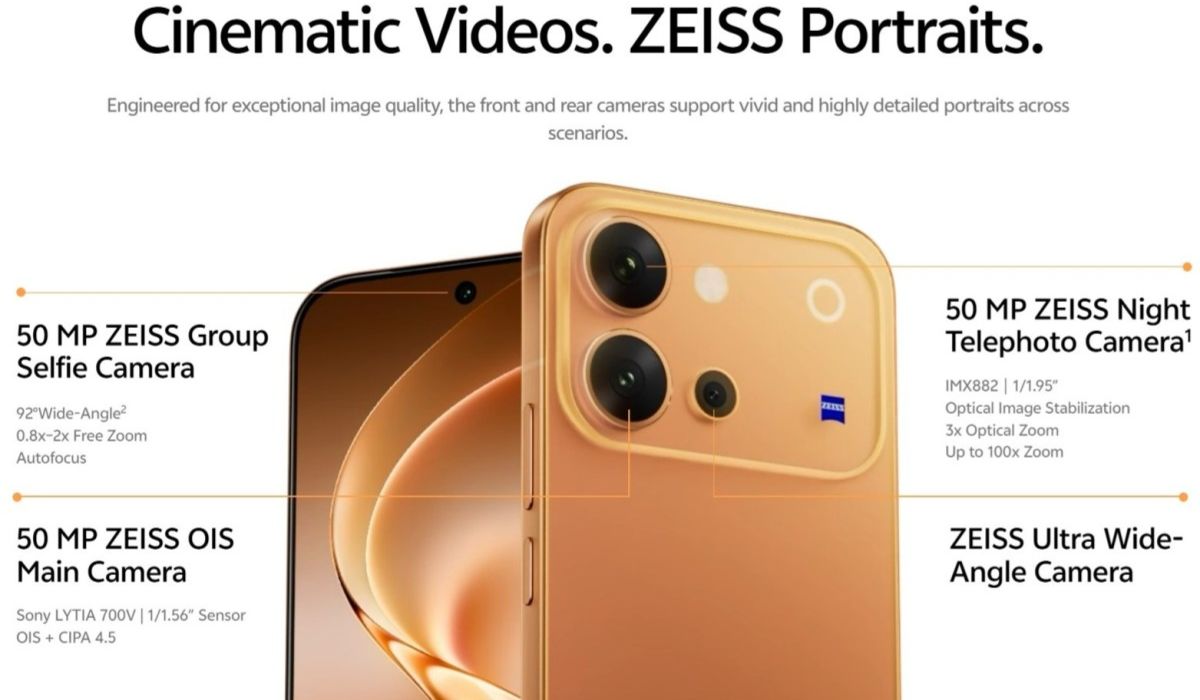
Cameras are supposed to be the V-series’ main attraction, but the V80 is looking suspiciously familiar. It has kept the same camera setup as in the V70: a 50MP Sony LYT-700V main camera with OIS, a 50MP Sony IMX882 3x telephoto with OIS, and an 8MP ultrawide, all backed by the ZEISS partnership.
The 3x ZEISS telephoto is still the highlight, and for good reason. But the 8MP ultrawide? That was already the weak link on the V70, and bringing it back for another generation is much harder to excuse. Especially when the recently launched OPPO Reno16, with a similar price range, offers a 50MP ultrawide alongside its 50MP main and 50MP telephoto cameras.
Now, here we find the major change which we have been looking for quite a while: software. Vivo is calling it “AI Creative Camera”, with more than 30 AI effects, including Live Sticker Collage, AI Diwali Portrait 2.0, and computational enhancements for 4K cinematic video.
“30+ AI effects” certainly sounds impressive, or like somebody in marketing got a little too excited with the plus sign. If the AI additions could genuinely improve the camera experience or those 30 effects turn out to be stickers and seasonal overlays you use once and forget about, then… well, 30 is just a number.
Battery is where the V80 finally gives us a proper generational upgrade. The phone is packed with 7,200mAh battery, up from the 6,500mAh unit on the V70, while keeping the same 90W charging.
On the OS end, the V80 boot on Android 17 with OriginOS 7, upgraded from Android 16 and OriginOS 6. The V70 promised four major Android upgrades and six years of security updates, so hopefully Vivo carries the same or better support policy over to the V80.
Vivo V80 Specifications
- Body: Unconfirmed
- Build: Aluminium alloy frame, IP68/69, 3D ultrasonic in-display
- SIM: Dual SIM (2 nano-SIMs)
- Display: 6.59-inch 1.5k 144Hz AMOLED Display 5,000 nits
- Chipset: Snapdragon 7 Gen 4 (4 nm)
- Memory: up to 12GB RAM, up to 512GB
- OS: Android 17, OriginOS 7
- Rear Camera: 50MP Sony LYT-700V, 1/1.56″, OIS
- 50MP Sony IMX882 telephoto, 1/1.95″, OIS, 3x optical zoom, up to 100x digital zoom
- 8 MP (ultrawide)
- Front Camera: 50 MP
- Battery: 7200mAh with 90W charging
- Colour: Sunrise Anthem, Horizon Blue, and Stellar Black
Vivo V80 Price in Nepal: Rs. 109,999 (12/256GB) [expected]
ALSO READ: vivo Mobiles Price in Nepal (September 2026 Updated)
The more you look at the Vivo V80, the harder it is to find the “new generation” part. Outside of the bigger battery, faster refresh rate, and especially the new software tricks, much of the phone feels carried over from the V70.
That would be easier to forgive if the price stayed sensible. But at our expected Rs. 109,999, the V80 is knocking on premium-phone territory without quite bringing premium-phone hardware to match.
And the competition is not exactly being polite about it either. If performance matters, phones like the Xiaomi 17T and POCO X8 Pro Max offer considerably more horsepower for less money. If cameras are the priority, the OPPO Reno16 becomes the more uncomfortable rival.
So, the V80 seems to be relying heavily on Vivo’s usual strengths – portraits, polished design, battery life, and now a bigger dose of AI – to justify the premium. Maybe that will be enough for V-series fans. But as a successor to the V70, the V80 currently feels less like a proper generational jump and more like a software-heavy refresh.
What are your thoughts on the Vivo V80? Let us know in the comments below!
-
Vivo V80 Launching Soon in Nepal: A V70 Refresh at a Higher Price?HIGHLIGHTS The Vivo V80 price in Nepal is expected to start from Rs. 109,999 for…

-
HMD Arc 2 Coming Soon in Nepal: New Look, Same Old Specs!HIGHLIGHTS The expected HMD Arc 2 price in Nepal starts from Rs. 15,999 for the…
-
Xiaomi 17T Becomes More Accessible in Nepal with New 12/256GB VariantHIGHLIGHTS The Xiaomi 17T price in Nepal starts at Rs. 92,999 (12/256GB). The 17T is…