

HIGLIGHTS
- The Yamaha FZS and Yamaha FZS Hybrid price in Nepal starts at Rs. 4.35 Lakhs.
- It is the first in its class to introduce Hybrid Technology in the 150cc segment.
- The bike is an upgrade to the FZS lineup, introducing new styling, features, and enhanced safety.
The new Yamaha FZS is finally here in Nepal in two new versions: FZS New Gen and FZS Hybrid. Yamaha has dropped the “Version 4” name and now simply calls it the FZS-FI, a move intended to simplify the lineup, but one that also creates some confusion. In this article, we break it down clearly and explain what has actually changed.

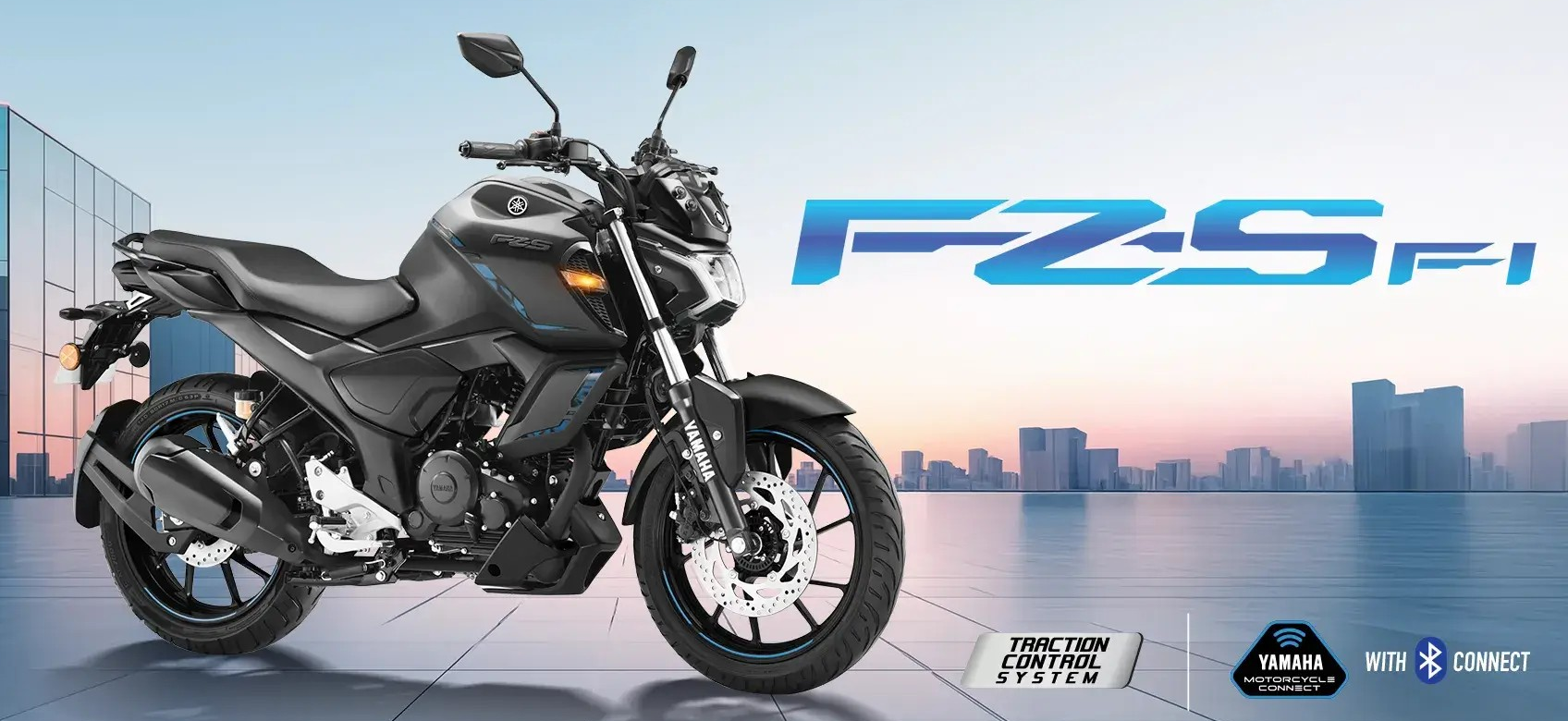
MAW Rides, the authorized distributor of Yamaha bikes in Nepal, is bringing yet another addition to the FZS series. This updated 150cc sporty commuter is based on the FZS Version 4 platform and serves as a successor to the FZS Version 3.

The new FZS FI focuses on quality-of-life upgrades that address the limitations of the previous model. Key updates include new Class-D LED headlamps, tank-mounted LED indicators, a revised digital instrument cluster, and a Traction Control System. Apart from these changes, the overall design and bodywork remain largely unchanged from the FZS v3 DLX.
These additions come at a cost. The 2026 FZS FI is priced roughly Rs. 19,000 to Rs. 79,000 higher than the Version 3 DLX, making it the most expensive motorcycle in the 150cc segment.
What is the Price of Yamaha FZS in Nepal?
The Yamaha FZS FI price in Nepal starts at Rs. 4.35 Lakhs for the FZS-FI (New Gen) to Rs. 4.90 Lakhs for the FZS-FI (Hybrid). Both of these bikes have been launched in Nepal.


There is a Rs. 55,000 price difference between the New Gen and Hybrid version. The top version, i.e., the FZS-FI Hybrid, features a new Color TFT Display and a Hybrid engine. This hybrid system, similar to the one used in the Ray ZR 125 Hybrid, utilizes a Smart Motor Generator (SMG) to enable Hybrid Assist, Silent Start, and Automatic Start-Stop functionality, resulting in improved mileage.
Check out the breakdown of the difference between the FZS non-Hybrid and FZS Hybrid.






As the latest iteration of the Yamaha FZS series, it fixes many of the shortcomings of the previous version and makes the bike more appealing overall. However, these upgrades have also pushed the price up, placing it above its key rivals. The real question now is whether the added cost is justified. Let’s find out.
Starting with the specifications of FZS FI in Nepal for 2026.


Yamaha FZS FI Specifications
- Engine Type: Single Cylinder, 4-stroke, 2-valve, FI
- Emission Standard: BS6
- Displacement: 149 cc
- Cooling System: Air-cooled Engine
- Starting Mechanism: Self-Start
- Max Power: 12.4 PS at 7250rpm
- Max Torque: 13.3 Nm at 5500rpm
- Gearbox: 5-Speed
- Top Speed: 115 Kmph
- Fuel Tank Capacity: 13 liters
- Mileage: 45-50 kmpl
- Front Tyre: 282mm Disc
- 100/80-17
- Rear Tyre: 220mm Disc
- 140/60-R17
- Tubeless Tyres: Yes
- Braking System: Single Channel ABS
- Suspension Setup: 41mm Telescopic Forks and Monocross Suspension
- Seat Height: 790 mm
- Ground Clearance: 165 mm
- Kerb Weight:
- 137 kg (New Gen)
- 138 kg (Hybrid)
- Colors:
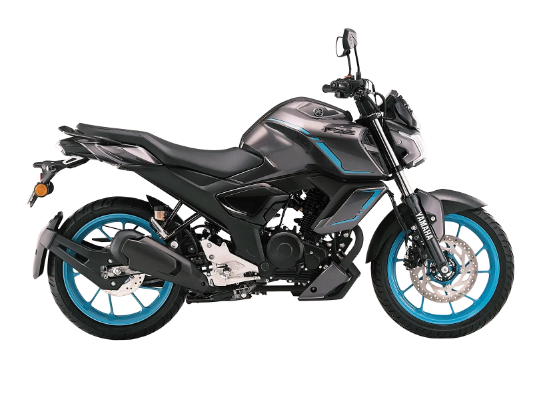
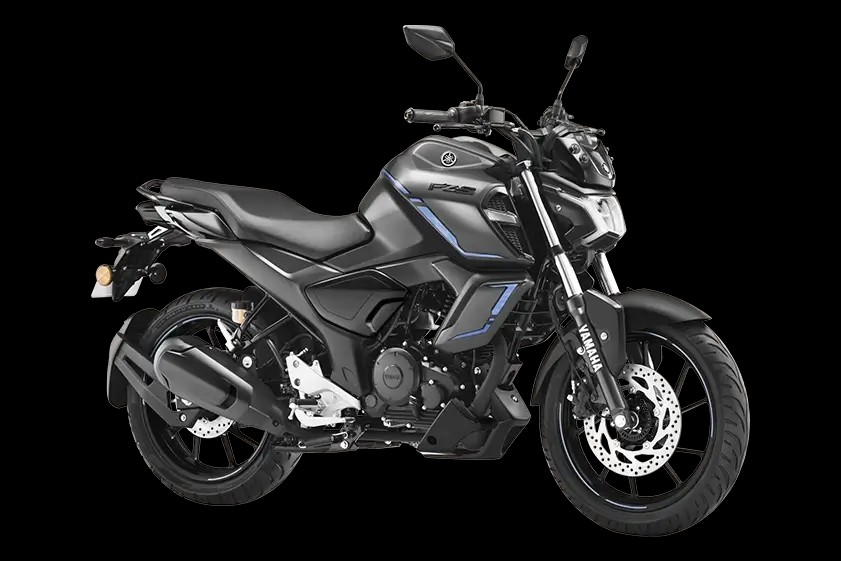
- Metallic Grey, Matte Black, Ice Fluo-Vermillion, Cyber Green (New Gen)
- Cyan Metallic Grey, Racing Blue, Matte Black (Hybrid)
Yamaha FZS FI V4 Price in Nepal: Rs. 4,34,900 (New Gen) / Rs. 4,89,900 (Hybrid)
ALSO READ: Yamaha Bikes Price in Nepal (March 2026 Updated)
Yamaha FZS FI Overview
Design
The Yamaha FZS FI carries over the same muscular and sporty design seen on the FZS V3 DLX, so the overall silhouette remains familiar.
The biggest visual upgrade is the new Class-D LED headlamp. It is designed to be brighter and offer more even light distribution than before. Alongside this, Yamaha has added new LED DRLs positioned on the sides of the headlamp, giving the front a sharper and more modern look.
Another notable change appears on the fuel tank. The chrome-finished tank ducts are now replaced with a blacked-out finish, which looks cleaner and more premium. The turn indicators are also new. They are now LED units and neatly integrated into the tank panels.
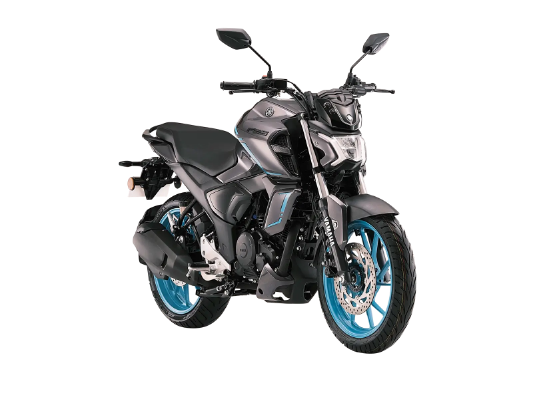
Beyond these updates, the side profile remains unchanged. The single-piece seat, 3D Yamaha emblem, and metal grab rails are carried over from the previous version and continue to give the bike a solid street presence.
At the rear, the FZS retains its LED tail lamp, now paired with LED indicators. This completes the all-LED lighting setup as standard across the range.
Instrument clusters differ by variant. The standard FZS gets an LCD meter inspired by the MT-15. It looks clean and functional, though it misses out on a gear position indicator. The top-spec Hybrid version upgrades to a 4.2-inch color TFT display, which feels more in line with the bike’s premium positioning.
Both versions support Yamaha’s Y-Connect Bluetooth system. Riders get call alerts, SMS and email notifications, phone battery status, and more on the display. Through the smartphone app, it also shows fuel consumption data, maintenance reminders, and the last parked location.
The Hybrid version benefits more from this setup thanks to the TFT screen, adding Turn-by-Turn Navigation, Music Control, and Hazard Light support.
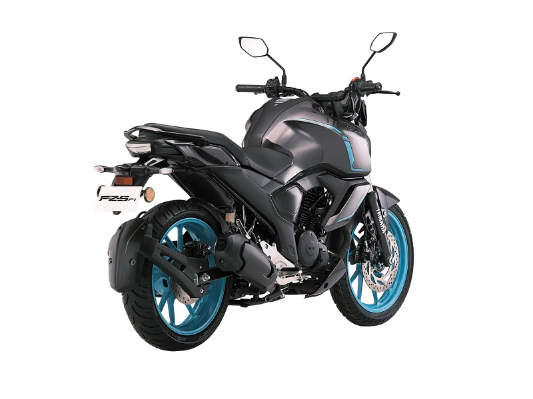
Color options also vary by version. The standard FZS is available in Metallic Grey, Matte Black, Ice Fluo-Vermillion, and Cyber Green. The Hybrid variant comes in Cyan Metallic Grey, Racing Blue, and Matte Black.
ALSO READ: TVS Apache RTR 160 4V Price in Nepal (March 2026 Updated)
Performance
Yamaha FZS is powered by the 149cc, 4-stroke, single-cylinder, SOHC, FI engine. It can generate a max power of 12.4 PS at 7250rpm and a max torque of 13.3 Nm at 5500rpm. Moreover, it is mated with a 5-speed gearbox and a 13-liter fuel tank.
The engine and powertrain remain unchanged from the V3 DLX. It continues to offer E20 fuel compatibility along with the Side-Stand Engine Cut-Off. What’s new in this iteration is that the Traction Control System (TCS) now comes as standard.
However, the Hybrid version takes things a step further. Similar to the Ray ZR 125 Hybrid, it features Yamaha’s Smart Motor Generator (SMG), which replaces the conventional starter motor. This enables Hybrid Boost Assist for quicker overtakes, Silent Start, and an Automatic Start-Stop system to improve fuel efficiency.
While this hybrid technology has already appeared on scooters and smaller 125cc motorcycles, its introduction in the 150cc segment is a first, giving the FZS Hybrid a unique edge in its class.
ALSO READ: Bajaj Pulsar N160 Price in Nepal (March 2026 Updated)
Additional Details
The Yamaha FZS measures 2000 mm in length, 780 mm in width, and 1080 mm in height, with a wheelbase of 1330 mm. It offers a ground clearance of 165 mm and a saddle height of 790 mm.
Suspension duties are handled by a 41 mm Telescopic Fork with 130 mm travel at the front and a 7-step adjustable Monocross rear suspension with 120 mm travel.
Braking is handled by a Dual-Disc setup with Single-channel ABS. And both variants are equipped with a Traction Control System.
ALSO READ: Suzuki Gixxer 155 Price in Nepal (March 2026 updated)
Yamaha FZS FI Variants Breakdown
The new Yamaha FZS FI is available in two versions: FZS New Gen and FZS Hybrid. Both share the same core design, engine performance, and standard features. However, the top-spec Hybrid variant adds Yamaha’s Hybrid engine technology, unlocking more advanced convenience and efficiency-focused features.
Here is a quick breakdown of how the two versions differ.
| Yamaha FZS FI Version 4 | New Gen | Hybrid |
|---|---|---|
| Price in Nepal | Rs. 434900 | Rs. 489900 |
| Meter | LCD | Color TFT with Nav and Controls |
| Self Starter Motor | Traditional | SMG |
| Traction Control | Yes | Yes |
| Hybrid Assist | No | Yes |
| Silent Start | No | Yes |
| Automatic Start-Stop | No | Yes |
Yamaha FZS FI Features Highlights
- Muscular Sporty Looks
- 149cc FI Engine / 149cc Hybrid FI Engine (NEW)
- E20 Fuel Compatible
- Class-D LED Headlamp and LED Taillight (NEW)
- Tank Integrated LED Indicators (NEW)
- Y-Connect Bluetooth Connectivity
- Side Stand Engine Cut-Off
- LCD Display / Color TFT Display (NEW)
- Lightweight Body
- 140-Section Wide Radial Tyre
- Dual Disc Braking with Single Channel ABS
- Traction Control System (NEW)
- Hybrid Features (NEW)
Yamaha FZS FI Price in Nepal and Availability
The Yamaha FZS FI price in Nepal starts at Rs. 4,34,900 for the FZS-FI and Rs. 4,89,900 for the FZS-FI Hybrid.
Both variants of the FZS FI lineup have already been launched in Nepal, so interested individuals can visit their nearest showroom for additional information.
The following table lists the Yamaha FZS FI price in Nepal for 2026.
| Yamaha FZS FI | Price in Nepal |
|---|---|
| Standard | Rs. 434900 |
| Hybrid | Rs. 489900 |
Rivals
With this update, the 150cc FZ series now sits firmly in premium territory. While the new iteration does narrow the gap between price and features, it is still positioned on the expensive side of the segment.
The 2026 FZS FI now costs more than the Pulsar N160 Dual-ABS and the Apache RTR 160 4V, and sits uncomfortably higher (particularly the Hybrid variant) than the Honda Hornet 2.0 in terms of price over value, as the price of the Hornet 2.0 is Rs. 4.70 Lakhs. That puts Yamaha in a risky position.
There are two possible outcomes. Either buyers accept the higher asking price, and Yamaha Nepal successfully redefines what a premium sporty commuter should cost. Or the pricing pushes potential buyers away, repeating the same story we saw with the Hornet 2.0: a capable motorcycle priced out of relevance.
That said, the FZS FI still makes sense for a specific buyer. If mileage, refinement, and Yamaha reliability matter more than outright performance or aggressive pricing, it remains a solid option that balances style, features, and everyday usability.
How the market responds to this pricing will ultimately decide whether the new FZS FI sets a benchmark or becomes a cautionary tale.
Do you think the Yamaha FZS can still make an impact in a value-centric market like Nepal? Does it have what it takes to replicate the success of the FZS Version 2 and Version 3? Share your thoughts in the comments below!
Frequently Asked Questions
Who is the authorized distributor of Yamaha FZS FI in Nepal?
MAW Enterprises is the authorized distributor of Yamaha FZS FI in Nepal.
What is the price of the Yamaha FZS FI in Nepal?
The price of Yamaha FZS FI starts at Rs. 4.35 Lakhs and goes up to Rs. 4.90 Lakhs.
What is the mileage of the FZS FI?
The mileage of FZS FI ranges from 45 kmpl to 50 kmpl. However, the inclusion of “hybrid” tech can theoretically push the mileage higher than that.
Does the Yamaha FZS FI have dual-channel ABS?
No, the FZS FI comes with a single-channel ABS only.
-
Xiaomi Pad 8 Launched in Nepal: The Ultimate Value Tablet?HIGHLIGHTS Xiaomi Pad 8 price in Nepal starts from Rs. 59,999 for the 8/128GB variant.…

-
Xiaomi 17 Ultra Pre-Bookings Open in Nepal with Exciting OffersHIGHLIGHTS The Xiaomi 17 Ultra price in Nepal is Rs. 1,99,999 (16/512GB). It features a…
-
Samsung Galaxy S26 Series Now Easier to Own in Nepal with 24 Months EMIHIGHLIGHTS Samsung introduces extended 24 months EMI with 40% downpayment on the Samsung S26 series.…