


HIGHLIGHTS
- Suzuki Victoris price in Nepal starts at Rs. 54 Lakhs.
- It is offered across FWD, 4WD, and Hybrid powertrain options.
- The Victoris is available in 32 variants, differentiated by feature set and powertrains.
Suzuki still refuses to fully let go of the internal combustion engine and remains one of the few major brands without a pure electric offering. The long-awaited e-Vitara has once again taken a back seat, while Suzuki Nepal moves forward with the Victoris instead. In a market racing toward EVs, that restraint could either look wise or painfully late.

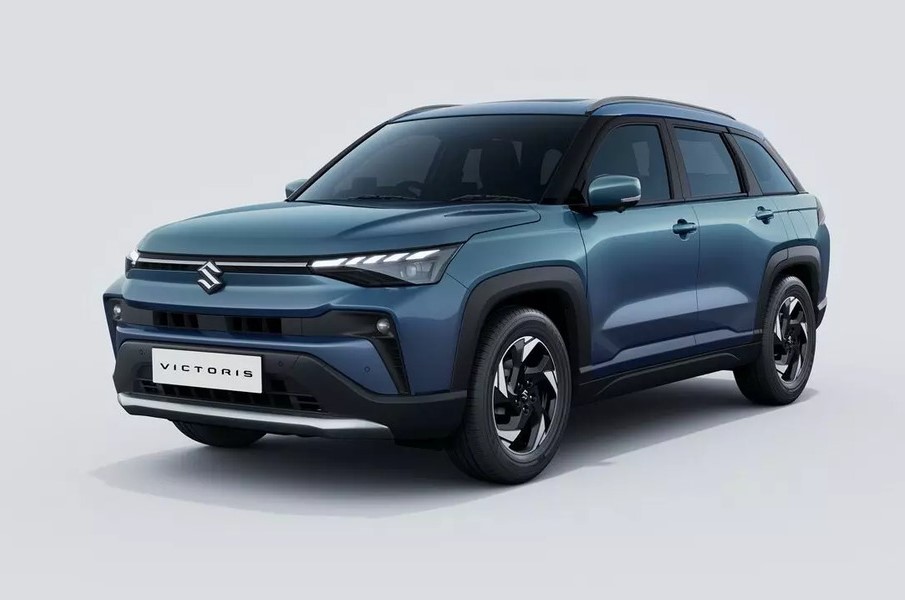
CG MotoCorp, the authorized distributor of Suzuki cars in Nepal, has added a new vehicle to its lineup, i.e., the Suzuki Victoris. This one is intended for a hot take at the C-segment SUV (mid-size SUVs) after the Grand Vitara.

Although the Victoris shares the same platform and engine as the Grand Vitara, the target customers for the Victoris are different than the Grand Vitara. There are two dealership networks of Maruti Suzuki in India: Arena and Nexa. While the latter one is for more premium vehicles like the Grand Vitara & Jimny, the former is reserved for budget-friendly cars such as the Swift and WagonR.
Interestingly, the Victoris is distributed via the Arena dealership network, so it is supposed to be more affordable than the Grand Vitara, which sits in the same segment. And, in fact, the Victoris is a tad more affordable than the Vitara.
What is the Price of Suzuki Victoris in Nepal?
Suzuki Victoris price in Nepal starts at Rs. 54 Lakhs and goes all the way up to Rs. 97.29 Lakhs. This price range accommodates two major variants in terms of powertrain, i.e., Smart Hybrid (which essentially is a petrol engine) and Strong Hybrid. Furthermore, the variants spread out in terms of transmission and drive setup.


The following table might help to clarify that:
| Powertrain | Transmission Type | Drive | Count of Variants |
|---|---|---|---|
| 1.5L Petrol | 5-Speed Manual (5MT) | Front-Wheel Drive (FWD) | 10 |
| 1.5L Petrol | 6-Speed Automated (6AT) | FWD | 9 |
| 1.5L Petrol | 6-Speed Automated (6AT) | All-Wheel Drive (AWD) | 4 |
| 1.5L Strong Hybrid | e-CVT | FWD | 9 |
If you want a full breakdown of all the variants, you can jump to the price list section of this article.
Suzuki Victoris has already been launched in Nepal, and distributors are offering some discounts on the first 50 units of the Victoris. You can refer to the price list for the discounts as well.
Now, the question is: Can the Suzuki Victoris really help revive interest in petrol cars in Nepal? It has a well-rounded lineup, plenty of promise, and a good leniency toward hybrids. But the real verdict will come once sales numbers start to drop. We will be following it closely, so be sure to check for further updates.


Let’s have a quick look at the key specs of the Suzuki Victoris in Nepal for 2026.
Suzuki Victoris Specifications
- Engine:
- 1.5 K15C Smart Hybrid Petrol (Available in LXi, VXi, ZXi, ZXi+, MT, and AT)
- 1.5L M15D Strong Hybrid Petrol (Available in VXi, ZXi, ZXi+, e-CVT only)
- Emission Standard: BS6 2.0
- Displacement:
- 1462 cc (Petrol, Petrol AT, ALLGRIP)
- 1490 cc (Strong Hybrid)
- Dimension: 4360 mm (L) X 1795 mm (W) X 1655 mm (H)
- Wheelbase: 2600 mm
- Max Power:
- 103 PS @6000 rpm (Smart Hybrid Petrol)
- 92.45 PS – Engine @5500 rpm + 80 PS – Electric (Strong Hybrid)
- Max Torque:
- 139 Nm @4300 rpm (Smart Hybrid Petrol)
- 122 Nm – Engine @3800-4800 rpm + 141 Nm – Electric (Strong Hybrid)
- Transmission:
- 5-Speed Manual (Petrol)
- 6-Speed Automatic with Paddle Shifters (Petrol)
- e-CVT (Strong Hybrid)
- Drive Type:
- FWD (Most variants)
- ALLGRIP Select AWD (Only in Petrol 6AT ZXi variant)
- Top Speed: N/A
- Fuel Tank Capacity: 45 liters
- Mileage:
- 21.18 km/l (Petrol MT)
- 21.06 km/l (Petrol AT)
- 19.07 km/l (Petrol ALLGRIP AT)
- 28.65 km/l (Strong Hybrid)
- Tyres: 215/60 R17
- Tubeless Tyres: Yes
- Safety System:
- 5-Star B-NCAP Rated, 6 Airbags, ESP, TCS, Hill Hold Control (All variants)
- ADAS (Available on Petrol 6AT and Strong Hybrid top variants)
- 360 Degree Camera, Electronic Parking Brake, TPMS (ZXi+ variants only)
- Suspension Setup: McPherson Strut and Torsion Beam
- Seating: 5
- Storage Capacity: N/A
- Ground Clearance: 210 mm
- Kerb Weight:
- 1145–1195 kg (Petrol MT)
- 1185–1225 kg (Petrol AT)
- 1285–1305 kg (Petrol ALLGRIP AT)
- 1250–1295 kg (Strong Hybrid)
- Colors:
- Monotone: Silver, Grey, Arctic White, Green, Bluish Black, Blue, Red
- Dual Tone (select variants): Blue with Bluish Black Roof, Red with Bluish Black Roof, Silver with Bluish Black Roof
Suzuki Victoris Price in Nepal: Rs. 53,99,000 – Rs. 97,29,000
ALSO READ: Suzuki e-Vitara Price in Nepal (March 2026 Updated)
Suzuki Victoris Overview
Exterior
Suzuki bases the Victoris on its “Chiseled Look” design philosophy, using sharp sculpted lines and a well-balanced silhouette to project an assertive, road-owning stance.
The approach feels familiar and deliberate, borrowing cues from Maruti’s evolving SUV playbook. You can see hints of the Grand Vitara in the underlying proportions, while the Brezza’s boxy, horizontal detailing influences the overall stance. Together, they create a cohesive family resemblance within the Arena lineup without making the Victoris look like a simple remix.
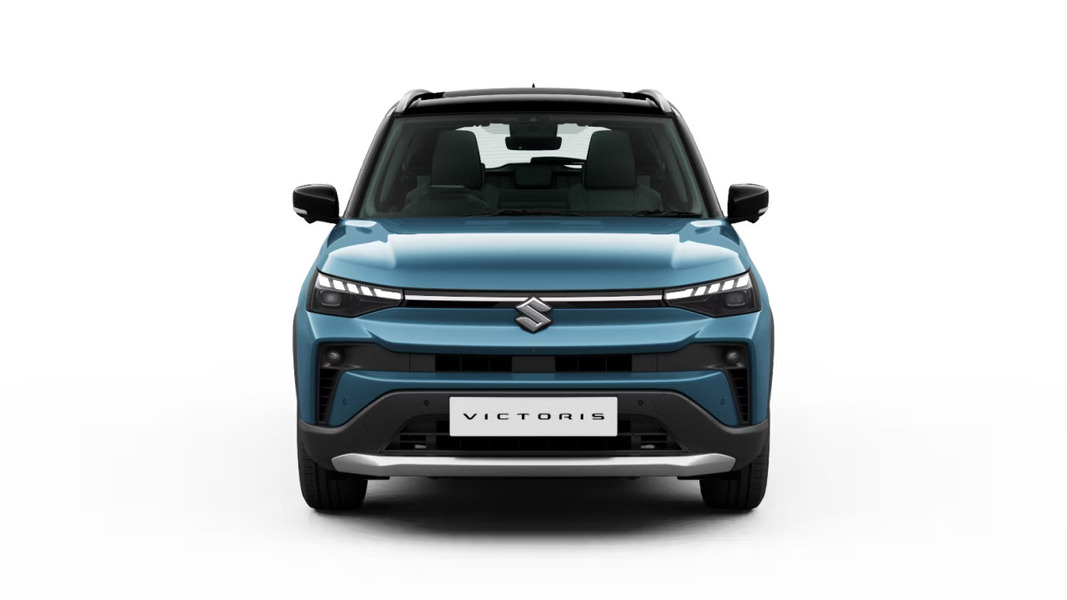
Up front, the Victoris clearly takes inspiration from the e-Vitara. The bifurcated fascia uses a blacked-out lower section that contrasts neatly with the body-coloured upper half. Slim LED headlamps sit under a thin chrome strip, which might look like a DRL at first glance, but it is not. The actual strip-style DRLs live inside the compact lighting units.
Lower trims keep things simpler with a full halogen setup, which feels slightly out of step with the premium positioning Suzuki is aiming for. The lower bumper features wide, confident air intakes, and the areas flanking the fog lamps house functional elements rather than decorative fillers. One point worth noting is the high placement of the fog lamps. In theory, this can reduce effectiveness in dense fog, although in Nepal’s typical driving conditions, it is unlikely to be a deal breaker.
The side profile plays it safe. Despite wearing the SUV badge, the Victoris rides on a 2600 mm wheelbase, which limits how dramatic the proportions can be. The 17-inch alloy wheels feature aero-inspired cuts, and that design choice does not appear accidental. The side air inlets ahead of the front wheels seem designed to guide airflow, and the wheel design likely complements that effort.
A blacked-out roofline gently tapers toward the D-pillar, adding a mild sporty touch without going full coupe. The sculpted character lines do their best to add visual muscle, even if the silhouette itself stays conservative.
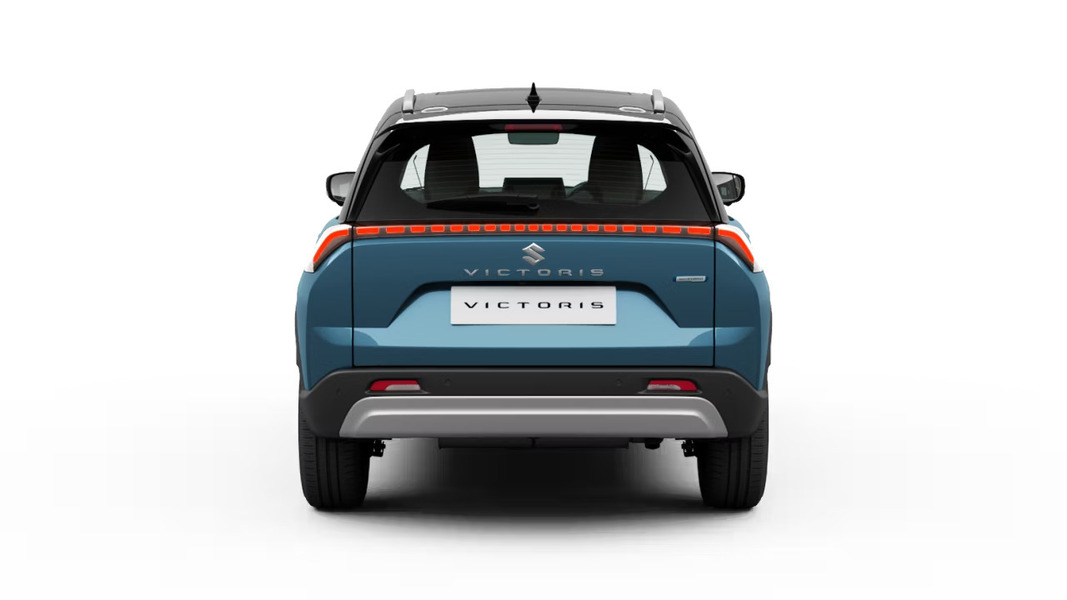
At the rear, the Victoris looks far more confident. The large rear glass improves visibility, and the inclusion of a rear wiper keeps things practical. The standout feature is the full-width segmented light bar that connects the taillamps. It looks striking at night and gives the Victoris a distinct signature from behind.
Higher variants add a powered tailgate, opening up a boot reportedly rated at around 446 liters, which should be more than adequate for family duties. But this boot space figure seems to be for the petrol variant. The hybrid variant, due to the battery pack sitting in this area, sees a serious limitation in the boot space. A diffuser-style bumper and dual exhaust finishers round off the rear design.
Suzuki offers the Victoris in both monotone and dual-tone exterior finishes. Monotone options include Silver, Grey, Arctic White, Green, Bluish Black, Blue, and Red. Select variants also get dual-tone combinations such as Blue with a Bluish Black roof, Red with a Bluish Black roof, and Silver with a Bluish Black roof.
Interior
The Victoris interior has a few genuinely interesting talking points. It is not flawless, but Suzuki’s intent is clear. The focus leans toward creating a relaxed and easygoing cabin. And, if you have spent time inside Suzuki’s newer SUVs, the layout will feel instantly familiar.
In the top trims, Suzuki adds leatherette upholstery along with ventilation for the front seats and a power-adjustable driver seat. These features immediately lift the experience and help the Victoris feel more premium than earlier offerings from the brand. The lower section of the dashboard uses soft-touch materials, reinforcing the upmarket direction Suzuki is aiming for. Sitting at the center is a 10-inch infotainment screen with support for both Android Auto and Apple CarPlay.
One area where the Victoris deserves genuine praise is its commitment to physical buttons. Nearly every major function has a dedicated control, from the steering wheel and center console to the door panels and the driver-side knee area. Some of these switches feel lifted straight from older Maruti Suzuki models, but familiarity is not a bad thing here. Buttons remain one of the most reliable forms of interaction, and Victoris benefits from having them in abundance.
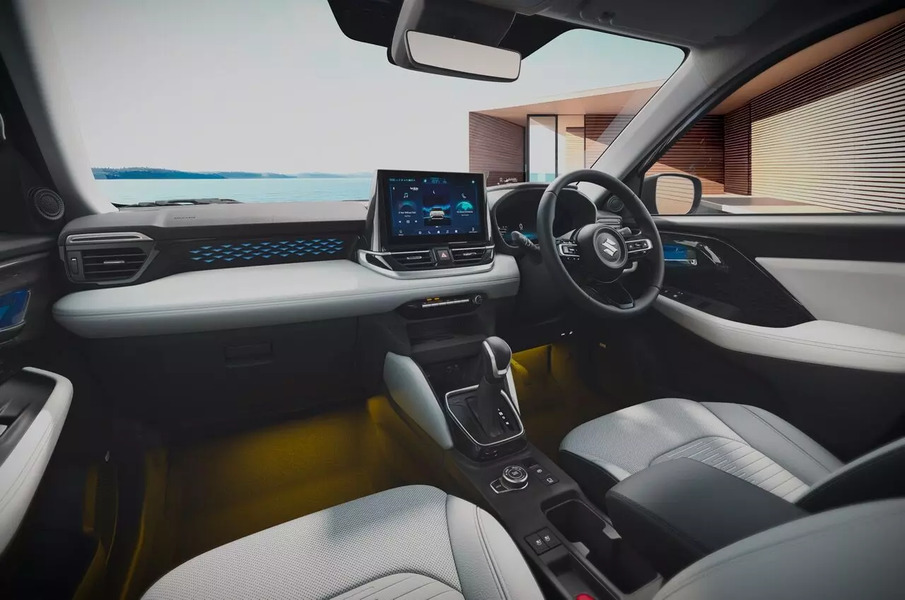
Where the interior stumbles is storage. The Victoris simply does not offer enough practical spaces, and the ones it does provide in the glove box, cup holders, and center console area are small and easily filled. This is a noticeable oversight in a family-focused SUV and an area Suzuki could have handled better.
That said, the top trims come heavily equipped to hold their own against rivals. A 10.25-inch digital instrument cluster, head-up display, sunroof, wireless charging, Infinity eight-speaker audio system, PM2.5 air filtration, 64 color ambient lighting, and updated infotainment software give the Victoris plenty of substance beyond the basics.
In terms of ambience, most variants use a black and white interior theme that feels airy and pleasant. The All-Wheel Drive version switches to an all-black cabin, trading brightness for a sportier and more serious tone.
ALSO READ: Hyundai Creta Price in Nepal (March 2026 Updated)
Performance
Suzuki has clearly prioritized coverage over straight-out performance with the Victoris, and that shows in how the performance story unfolds across its variants. But it’s not so surprising because Suzuki’s cars in these markets are not known for performance on any day.
The first engine option comes with the standard 1.5L K15C Smart Hybrid petrol, which produces 103 PS at 6000 rpm and 139 Nm at 4300 rpm, paired with either a 5-speed manual or a 6-speed automatic. On paper, the numbers look adequate, but not very exciting.
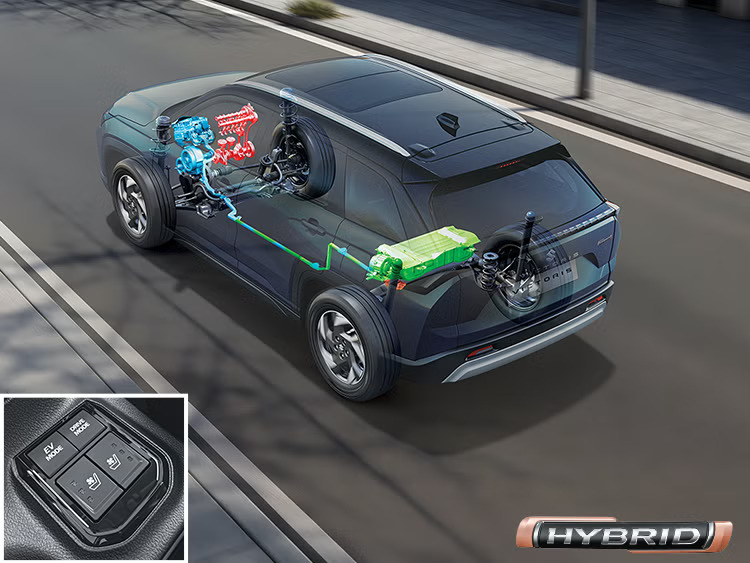
In practice, the engine is meant to give a smooth and predictable performance, which is better suited for city traffic and will even let you down on highways. Mileage stands at 21.18 km/l (MT) and 21.06 km/l (AT), which is a respectable score as expected from Maruti Suzuki. The “hybrid” tag on this variant essentially implies that the 12V–6Ah lithium-ion battery paired with the Integrated Starter Generator assists the engine during start-stop situations and mild acceleration.
The more convincing setup is the Strong Hybrid that comes with the 1490cc M15D engine, which basically is a hybrid engine. The petrol unit in this hybrid produces 92.45 PS of max power at 5500 rpm and 122 Nm of max torque between 3800-4800 rpm. And, the electric unit produces an 80 PS of max power between 3995 – 5500 rpm and a max torque of 141 Nm at 0 to 3995 rpm. This variant also comes with three different power modes: Eco, Normal, and Power.
Low-speed response on this one feels sharper, smoother, and far more refined than the mild-hybrid versions. The 28.65 km/l efficiency figure also puts it in a different league altogether. That said, the e-CVT dulls driver involvement, making this a calm, efficient cruiser rather than a driver’s car.
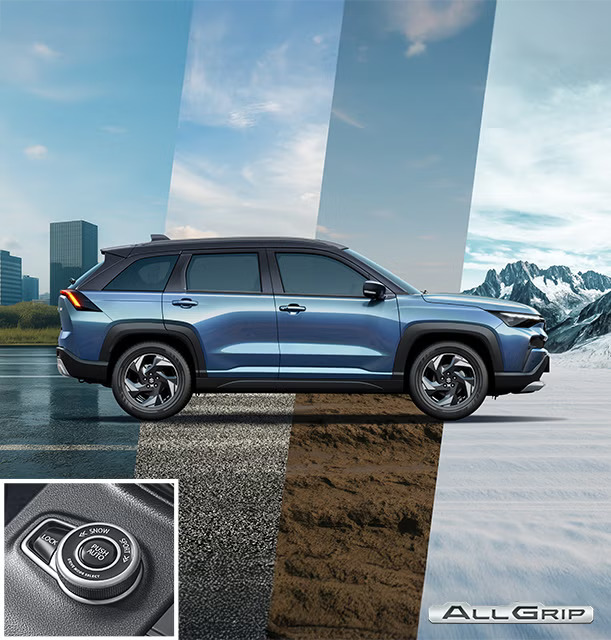
Most of the variants are Front Wheel Drive, and only a single: “The ALLGRIP Select” features an AWD setup. This one is available only with the petrol automatic and keeps power unchanged at 103 PS and 139 Nm but sacrifices efficiency, dropping mileage to 19 km/l. The payoff comes in added traction and confidence on poor roads and slippery surfaces. So it is more about capability than performance.
The ALLGRIP trim allows four different terrain modes: Snow, Sport, Lock, and Auto.
Additional Details
McPherson Strut and Torsion Beam handles the suspension duties, and this implies that the suspension setup is not a sophisticated setup. It is seen in many budget cars.
The dimensions are 4360 mm in length, 1795 mm in width, and 1655 mm in height. Moreover, the wheelbase is 2600 mm.
The ground clearance of the Suzuki Victoris is 210 mm. One interesting bit is in the lightweight design of the Victoris. While the kerb weight depends on the variant in question, the maximum kerb weight is just 1295 kg (for Strong Hybrid) and can be as low as 1145 kg (Petrol MT).
A little letdown is in the boot space, which is smaller compared to rivals when you look at it. The exact figure in liters is not revealed, but it’s more of a doable space rather than a spacious space.
Suzuki Victoris Features Highlight*
Exterior:
- LED Projector Headlamps
- LED Daytime Running Lamps with Dual Function Position Lamps
- 17-inch Machined Alloy Wheels
- Auto Folding ORVMs
- Rear Wiper
- Smart Powered Tailgate with Gesture Control
Interior:
- Leatherette Seats
- Fully Digital 10.25-inch Instrument Cluster
- 10.1-inch HD Touchscreen Infotainment System
- Infinity by Harman 8-Speaker Audio System with Dolby Atmos
- Wireless Android Auto and Apple CarPlay
- Wireless Charger with Active Cooling
- 64-Colour Ambient Lighting
- Ventilated Front Seats
- 8-Way Power Adjustable Driver Seat
- Head-Up Display
- Panoramic Sunroof (Optional)
Safety:
- 5-Star B-NCAP Rated
- 6 Airbags
- Electronic Stability Program & Traction Control System
- Hill Hold Assist
- Electronic Parking Brake with Brake Hold
- 360-degree HD Camera
- Tyre Pressure Monitoring System
- Level 2 ADAS (6AT & Strong Hybrid only)
*Aforementioned features are the ones available in the top-tier variants (ZXi+ / ZXi + (O))
Suzuki Victoris Price in Nepal and Availability
The Suzuki Victoris price in Nepal starts at Rs. 53,99,000 for the 5MT 2W LXi variant and goes up to Rs. 97,29,000 for the Hybrid 2W ZXi+ (O) Dual Tone Color Option. Within this price range, there are a total of 32 variants that are different in terms of transmission, drive type, and features.
The following table lists the Suzuki Victoris variants along with their price in Nepal for 2026. But, interested individuals can reach out to their nearest Suzuki showroom for additional information.
| Suzuki Victoris Variants | Price in Nepal | Offer Price (For First 50 Units) |
|---|---|---|
| 5MT 2W LXi | Rs. 53,99,000 | Rs. 50,99,000 |
| 5MT 2W VXi | Rs. 58,99,000 | Rs. 55,99,000 |
| 5MT 2W ZXi | Rs. 62,99,000 | Rs. 59,99,000 |
| 5MT 2W ZXi Dual | Rs. 63,29,000 | Rs. 60,29,000 |
| 5MT 2W ZXi (O) | Rs. 64,99,000 | Rs. 61,99,000 |
| 5MT 2W ZXi (O) Dual | Rs. 65,29,000 | Rs. 62,29,000 |
| 5MT 2W ZXi+ | Rs. 67,99,000 | Rs. 64,99,000 |
| 5MT 2W ZXi+ Dual | Rs. 68,29,000 | Rs. 65,29,000 |
| 5MT 2W ZXi+ (O) | Rs. 69,99,000 | Rs. 66,99,000 |
| 5MT 2W ZXi+ (O) Dual | Rs. 70,29,000 | Rs. 67,29,000 |
| 6AT 2W VXi | Rs. 66,99,000 | Rs. 63,99,000 |
| 6AT 2W ZXi | Rs. 70,99,000 | Rs. 67,99,000 |
| 6AT 2W ZXi Dual | Rs. 71,29,000 | Rs. 68,29,000 |
| 6AT 2W ZXi (O) | Rs. 72,99,000 | Rs. 69,99,000 |
| 6AT 2W ZXi (O) Dual | Rs. 73,29,000 | Rs. 70,29,000 |
| 6AT 2W ZXi+ | Rs. 80,99,000 | Rs. 77,99,000 |
| 6AT 2W ZXi+ Dual | Rs. 81,29,000 | Rs. 78,29,000 |
| 6AT 2W ZXi+ (O) | Rs. 82,99,000 | Rs. 79,99,000 |
| 6AT 2W ZXi+ (O) Dual | Rs. 83,29,000 | Rs. 80,29,000 |
| 6AT 4W ZXi+ | Rs. 88,99,000 | Rs. 85,99,000 |
| 6AT 4W ZXi+ Dual | Rs. 89,29,000 | Rs. 86,29,000 |
| 6AT 4W ZXi+ (O) | Rs. 90,99,000 | Rs. 87,99,000 |
| 6AT 4W ZXi+ (O) Dual | Rs. 91,29,000 | Rs. 88,29,000 |
| THS 2W VXi | Rs. 84,49,000 | Rs. 81,49,000 |
| THS 2W ZXi | Rs. 88,49,000 | Rs. 85,49,000 |
| THS 2W ZXi Dual | Rs. 88,79,000 | Rs. 85,79,000 |
| THS 2W ZXi (O) | Rs. 89,99,000 | Rs. 86,99,000 |
| THS 2W ZXi (O) Dual | Rs. 90,29,000 | Rs. 87,29,000 |
| THS 2W ZXi+ | Rs. 94,99,000 | Rs. 91,99,000 |
| THS 2W ZXi+ Dual | Rs. 95,29,000 | Rs. 92,29,000 |
| THS 2W ZXi+ (O) | Rs. 96,99,000 | Rs. 93,99,000 |
| THS 2W ZXi+ (O) Dual | Rs. 97,29,000 | Rs. 94,29,000 |
Rivals
The Suzuki Victoris is aimed squarely at the mid-size SUV segment, where the Hyundai Creta still rules. Both brands offer a wide range of variants and trims, so they command a significant share of the ICE SUV market in Nepal. Yet, the balance clearly tips in Hyundai’s favor. Despite being more expensive, the Creta remains the more popular choice.
The Victoris, on the other hand, brings clear strengths to the table. It promises good mileage, affordability, and the ability to tackle rough roads while keeping passengers comfortable. And, although the all-wheel drive option offered on the Victoris is more expensive than the top variant (SX(O) CVT) of the Creta, at least there is one on offer. AWD is completely abandoned in the entire Creta’s lineup.
However, the Creta shines where it matters for driving enthusiasts. Its turbo petrol engines provide more excitement on the road, something Suzuki missed by not including a turbo option in the Victoris lineup. On top of that, the Creta edges ahead in cabin refinement and interior polish, while the Victoris focuses more on being versatile and practical.
For people looking to buy a petrol mid-size SUV, if placed with a choice, the starting price of Victoris, i.e., 54 Lakhs, can be an attractive thing instead of the 57.96 Lakhs starting price for Creta. However, a difference of just Rs. 4 lakh is not the only factor; taking on the Creta’s dominance requires more than affordability. The Victoris is a new entrant that still needs to prove itself in the market, whereas the Creta is already a well-established household name. So for now, the Creta takes home the trophy.
Will Suzuki Victoris be able to boost the appeal of petrol cars and climb up the sales in Nepal? Do let us know in the comments.
Frequently Asked Questions
Who is the authorized distributor of Suzuki Victoris in Nepal?
CG MotoCorp is the authorized distributor of Suzuki Victoris in Nepal.
What is the price of the Suzuki Victoris in Nepal?
Suzuki Victoris price in Nepal starts at Rs. 54 Lakhs for the 5MT 2W LXi variant and goes up to Rs. 92.29 Lakhs for Hybrid 2W ZXi+ (O).
How much is the ground clearance in the Suzuki Victoris?
The ground clearance in the Suzuki Victoris is 210 mm.
What is the price of Maruti Suzuki Victoris in India?
Maruti Suzuki Victoris price in Nepal starts at INR. 10.50 Lakhs to INR. 19.99 Lakhs.
What is the mileage of the Suzuki Victoris?
The mileage of Suzuki Victoris is 21.18 kmpl for Petrol MT, 21 kmpl for Petrol AT, 19 kmpl for Petrol AWD, and 28.65 kmpl for Strong Hybrid.
Is the Suzuki Victoris a 7-seater?
No. Suzuki Victoris is a 5-seater car.
-
Ather Rizta Gets More Affordable in Nepal: Rizta S Cuts Price, But Also FeaturesHIGHLIGHTS Ather Rizta price in Nepal starts at Rs. 2.95 Lakhs and goes up to…

-
Samsung Galaxy A37 Headed to Nepal: What Has Changed Really?HIGHLIGHTS The Samsung Galaxy A37 price in Nepal could start at Rs. 58,999 (8/128GB). The…
-
Honor Magic 8 Pro Confirmed to Launch in Nepal with a 200MP Periscope LensHIGHLIGHTS The Honor Magic 8 Pro price in Nepal could start from Rs. 1,84,999 for…